

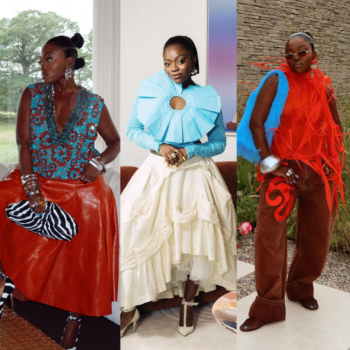

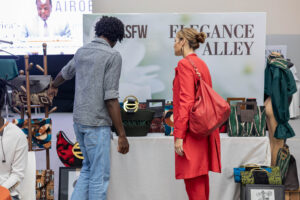
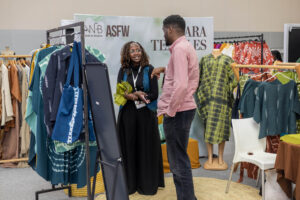
Nairobi was alive with energy from April 30th to May 2nd as the city played host to the 5th Edition of Africa Sourcing Fashion Week (ASFW), one of the continent’s leading sourcing and trade platforms for the textile, leather, accessories, footwear, and home décor industries. Drawing more than 3,500 visitors from over 30 countries, the three-day event brought together designers, manufacturers, buyers, policymakers, and fashion entrepreneurs all under one roof to explore the future of Africa’s fashion and manufacturing landscape.
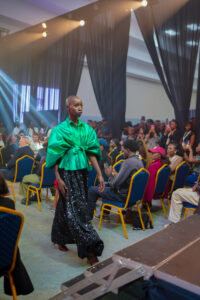
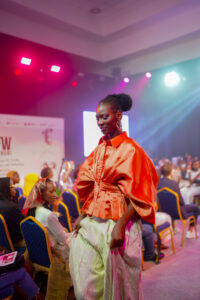
From insightful panel discussions and dynamic networking sessions to designer pop-ups, runway showcases, and conversations around sustainability, circular fashion, and digital sourcing trends, ASFW Nairobi created a vibrant meeting point where creativity met commerce. The atmosphere reflected a growing momentum across the continent — one where African fashion is not only influencing culture but increasingly shaping global conversations around innovation, production, and sustainable growth.
Skander Negasi, CEO of Trade and Fairs Group, shares that ASFW was first launched 12 years ago in Ethiopia, driven by the immense potential of the region’s leather and textile industry. Five years ago, the platform expanded with a Kenya edition, further strengthening its footprint on the continent.
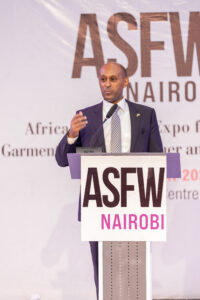
For West Africa, Senegal serves as the host country, chosen for its stability and strong appreciation for classic fashion. Through these three key hubs, alongside a partner presence in Cape Town, South Africa, the vision is clear — to grow and nurture the African fashion market on a global scale.
Speaking on the next generation, Skander Negasi notes that Gen Z deeply understands the value of trade shows and their impact on the industry. While they are highly engaged with e-commerce and social media, they are equally intentional about purchasing quality over fast fashion. There is a growing curiosity around traceability, from the origin of products to fair wages and the entire production cycle. With a strong sense of pride in their African heritage and culture, the youth are shaping a future filled with even greater opportunities for the continent’s fashion industry.
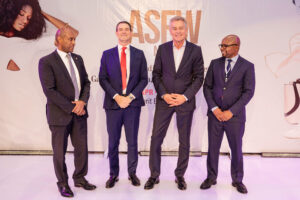
African Sourcing Fashion Week also marked an important milestone during this 5th edition by signing a partnership agreement with Messe Frankfurt, one of the world’s largest trade fair and event organizers, established over 800 years ago. The collaboration will significantly elevate the ASFW Nairobi platform by bringing globally renowned international brands and further strengthening the region’s position in the global value chain.

Detlauf Braun, Member of the Executive Board, Messe Frankfurt Exhibition GMBH, shared that although AI is being used in every aspect of today’s life, it will not affect the future of trade shows.
He believes that technology and trade shows are a strong combination and synergy that cannot be ignored. However, the key is finding ways to integrate AI in compiling data and digital content that can aid efficiency through analytics as teams prepare for various trade shows.
Detlauf Braun emphasizes that there will always be a need for physical touch, presence, and interaction at trade shows, and AI cannot replace these key aspects.

Filippo Amato, Head of the Trade Section at the European Union Delegation to Kenya, highlights the EU’s pivotal role in shaping Africa’s trade landscape, particularly through strategic participation in trade fairs. He notes that the EU’s partnerships with African countries are intentionally designed to drive economic growth, deepen regional integration, and unlock access to European markets for African producers.
Central to this is a range of tailored trade schemes, including the “Everything But Arms (EBA)” initiative, which grants duty-free and quota-free access to the European market for all products except arms and ammunition, designed to support developing countries’ economies.
In Kenya’s case, a significant milestone was reached in 2023 with the signing of a trade agreement that allows Kenyan exports to enter the European market duty- and quota-free. Filippo Amato adds that the EU is now focused on increasing awareness among African businesses while positioning Europe as a premium destination for African textile and garment exports, especially given its proximity, which allows for faster and more efficient logistics and fulfillment.


Beyond market access, the EU is also investing in Kenya’s creative economy through capacity-building programs targeting small and medium enterprises in the textile and leather sectors. These initiatives emphasize sustainability, circularity, and value addition, particularly in the leather industry, where efforts are geared towards transforming raw materials into high-quality finished goods that meet international standards.
This not only enhances brand competitiveness and revenue but also creates employment opportunities.
Looking ahead, the EU aims to significantly increase exports of finished textile and leather products over the next decade, driven by a growing appreciation among European consumers for the vibrancy, craftsmanship, and creativity of African design.
Nicholas Mudungwe, Executive Director of the Africa Leather and Leather Products Institute (AALPI), shares that Africa Sourcing Fashion Week (ASFW) can accelerate the positioning of Africa’s leather industry as a globally competitive sourcing destination by deliberately inviting global fashion brands, retail outlets, boutique owners, wholesalers, and distributors to participate in structured business-to-business (B2B) meetings with African leather and textile manufacturers.
This buyer-facing dimension is essential if Africa wants to be seen not only as a creative continent but also as a reliable sourcing base.
Across the leather value chain, the major constraints remain poor hide quality, fragmented raw material aggregation, outdated equipment, skill gaps, weak design and branding, and limited access to affordable finance. These challenges require coordinated efforts among stakeholders, governments, and development partners.
As we reflect on the 5th Edition of African Sourcing Fashion Week (ASFW) and prepare for the 7th Edition of the Nairobi event in 2027, what is evident is that ASFW can continue to become a strong accelerator by serving as a collaborative platform that connects African manufacturers with the right buyers while jointly addressing quality compliance and capacity gaps.
This shared effort can foster a sense of collective purpose, making industry growth a common goal rather than a series of isolated efforts.
zf94z5
3d41mt
Woah! I’m really digging thhe template/theme oof his blog.
It’s simple, yeet effective. A lott off ties it’s difficult too geet thaat “perfect balance” bettween sperb
usabiility aand visual appeal. I mmust sayy you’ve dpne a awesome jobb with
this. Also, thee blog liads supedr fast for mee oon Chrome.
Suprb Blog!