






You leave the salon with your hair looking silky and smooth, and three weeks later you are pulling broken strands off your shoulder. Usually, it was not the relaxer. It was the 72 hours after it, and the weeks that followed. Post-relaxer hair care is not complicated, but it is specific about timing. Here is the full relaxer aftercare routine, from the chair to your next retouch.
Why Aftercare Matters More Than the Relaxer Itself
A relaxer breaks the bonds that hold your curl pattern in place, and once broken, they do not come back. You are left with straighter hair that is more porous and loses water faster than before.
That alone is not a problem. It becomes one when you keep treating your hair as you did before the cream went on. Same washing habits, same tight styles, same nothing at night. Six months of that and the damage shows at your ends first, then at the line where new growth meets relaxed hair. Learning how to take care of relaxed hair is mostly about consistency, not about buying more products.
Immediately After Your Relaxer (First 48 to 72 Hours)
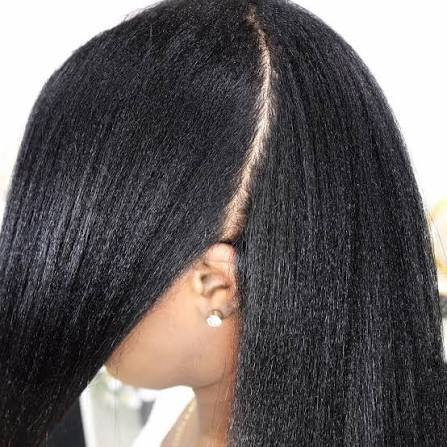

Your hair looks its best now and is at its most fragile at the same time. So what should you do after relaxing your hair? As little as possible.
Why You Shouldn’t Wash or Heat-Style Right Away
Wait at least 48 hours before washing, and 72 if you can hold out. The neutralizing shampoo your stylist used already stopped the chemical process, so this is not about the relaxer still working. It is about the hair fibre settling into its new shape.
Washing early, or reaching for a straightener or blow dryer, stacks stress onto hair that has not finished recovering. So do tight ponytails, clips gripping one spot, and constant combing. If your stylist set your hair before you left, let the set do the work.
So, how long after a relaxer can you wash your hair? Two days is the floor. Three is better.
Signs Your Scalp Needs Extra Care
A bit of tingling during the service is normal. Redness, tenderness, flaking or small scabs afterwards are not. Those mean the scalp barrier took a hit and needs to be left alone.
Do not scratch, and skip anything heavily fragranced until it settles. A light oil on the sore spots is enough. Resist the thick hair food on your dresser, since heavy grease on an irritated scalp traps heat. If soreness spreads or weeps, see a doctor.
Your Weekly Relaxed Hair Care Routine
Wash gently, deep condition weekly, keep moisture in between. That is the whole system, and it is all that knowing how to keep relaxed hair healthy really requires.

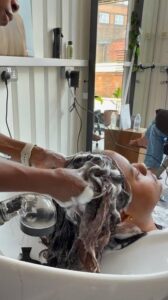
Washing Frequency and Technique
Every 7 to 10 days suits most relaxed hair. If you are asking how often you should wash relaxed hair and you currently wash twice a week, that is likely part of your breakage problem. Relaxed strands hold far less natural oil than they used to.
Use a sulfate-free, moisturizing shampoo like Mega Growth. Work it into your scalp with your fingertips and let the foam run down the lengths as you rinse instead of scrubbing the hair. Rinse with cool or lukewarm water, not hot water, because heat opens the cuticle and lets moisture escape. One foamy Shampoo round is enough; skip the second round unless your hair is genuinely dirty.
Deep Conditioning: How Often and Why
Weekly, without skipping. Deep conditioning relaxed hair is not a treat for when you remember. It puts back what the relaxer took out.
Alternate moisture and protein: a moisturizing treatment most weeks, then a protein or reconstructing treatment every four to six weeks. Too much protein leaves hair stiff and snappy, too little leaves it weak, and that balance is what is missing when hair feels soft but keeps breaking anyway.
Apply to clean, damp hair, cover with a plastic cap, and give it 15 to 20 minutes with gentle heat before rinsing cool. Use something made for chemically treated hair. MegaGrowth Deep Conditioner is built for it, and you can browse the MegaGrowth range for the rest of the routine.
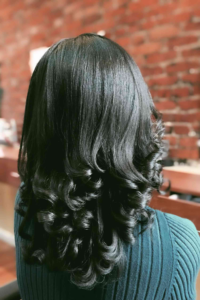
Daily and Weekly Moisturising
Moisturising relaxed hair works as a habit, not a rescue. By the time hair feels dry, it has been dry for days.
Between wash days, use a leave-in and seal with a little light oil, concentrating on your ends. Your ends are the oldest hair on your head and the first to go. Breakfree Leave-In Strengthener does both jobs, adding moisture while reinforcing strands that are now more fragile.
Harmattan deserves a mention. From November, the dry wind pulls water out of relaxed hair fast, and a routine that felt fine in August will leave it brittle by December. Moisturise more often through those months.
Protecting Relaxed Hair from Breakage
Most length is lost to friction and tension, not to the relaxer. Relaxed hair breakage prevention comes down to how you handle your hair on ordinary days.
Protective Styling for Relaxed Hair
Buns, flat twists and loose braids cut down the daily combing and pulling that wears relaxed hair thin, especially at the line where new growth meets relaxed hair. That meeting point is the weakest part of your hair, and it snaps before anywhere else.
What to avoid is more specific. Slicked-back ponytails held with packing gel and pulled tight are hard on your edges, and several days a week of it will thin your hairline. Bare rubber bands and tight weave-ons belong in the same category. The old test still works: if it hurts going in, it is too tight. If your hair is already showing wear, add MegaGrowth Damage Protection.
Nighttime Routine: Satin, Wrapping, and Sleep Care
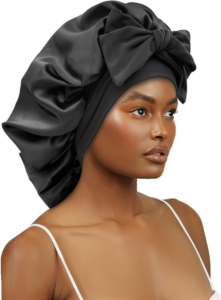
Cotton pulls moisture out of your hair and creates friction all night. A satin or silk bonnet, scarf or pillowcase solves both, and it is the cheapest upgrade in this routine.
Wrap your hair smoothly before bed rather than bunching it under a scarf. Wrapping keeps hair lying in one direction instead of rubbing against itself, and it buys you days between washes. An ordinary cotton scarf does not count, and neither does one that slides off by 2 am.
Common Aftercare Mistakes That Damage Relaxed Hair
- Washing before the 48-hour mark, while the hair is still settling
- Sulfate-heavy shampoo week after week, stripping moisture every time
- Treating a quick rinse-out conditioner as a substitute for real deep conditioning
- Letting relaxer run over previously relaxed hair instead of new growth only
- Piling hair food on the scalp and calling it moisture, while the hair gets nothing
- Blow drying or straightening hair that has not been moisturized first
- Sleeping on cotton, or in a scarf that never survives the night
Almost nobody ruins their hair in one afternoon. It happens through one or two of these repeated over months, which is why correcting them works quickly.
Building a Routine Between Touch-Ups
Retouch every 8 to 10 weeks, and only on new growth. Overlapping relaxer onto already-relaxed hair is the fastest route to overprocessing, and it happens easily when someone is rushing or doing it at home. MegaGrowth Relaxer is meant for new growth only, and following that matters more than which brand sits in your bathroom.
Waiting too long has its own cost. Once new growth passes a certain length, the point where two textures meet gets fragile enough to snap during ordinary combing, so stretching a retouch to four months often costs you the length you were protecting. This is the part of relaxer touch-up aftercare most people skip.
In between, keep to the weekly wash and deep conditioning, stay in low-tension styles, and trim every 8 to 12 weeks. Weave-on and braids help, but only if they are not installed tight and you are still washing underneath. Most relaxed hair growth tips come back to one idea: you are not trying to grow faster; you are trying to stop losing what you already grew.
FAQs
How soon can I wash my hair after a relaxer?
Wait at least 48 hours, ideally 72. The neutralizing shampoo used at the salon has already stopped the chemical process, but the hair fibre needs a few days to settle into its new structure, and washing before then adds stress while it is most fragile.
How often should relaxed hair be deep conditioned?
Once a week. Use a moisturizing deep conditioner most weeks and rotate in a protein or reconstructing treatment every four to six weeks. Relaxed hair loses both moisture and protein faster than untreated hair, and alternating keeps the two in balance instead of overloading either one.
Why is my relaxed hair breaking?
The usual causes are washing too often, skipping deep conditioning, tight styles that hold tension on the same spot, heat styling on dry hair, and relaxer overlapping onto already-relaxed sections during a retouch. Work through those five before changing products. The routine is usually the problem, not the shelf.

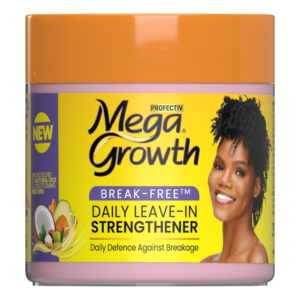
A relaxed hair routine in Nigeria does not need to be complicated. It needs the same few steps done consistently, with products made for chemically treated hair. Browse the full MegaGrowth range and build around deep conditioning, leave-in moisture and damage protection.
*Sponsored Post