




Ask around and you will hear it repeated like fact: if the relaxer does not bite, your hair will not come out straight. It is one of the most stubborn myths in the salon, and it is why so many people sit through pain they should have stopped. So why do relaxers burn? Because they are strongly alkaline and your scalp is skin. That is the whole explanation. The useful part is how much of that burning is avoidable.
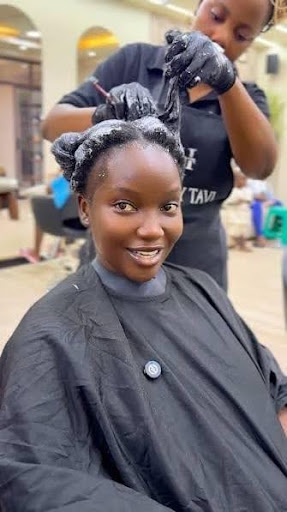
What Actually Causes a Relaxer to Burn
Relaxers straighten hair by breaking the bonds that hold your curl pattern in place. That chemistry does not distinguish between hair and skin. Hair is dead protein and can take it. Your scalp is living tissue and cannot.
The Chemistry Behind Relaxer Burns (Explained Simply)
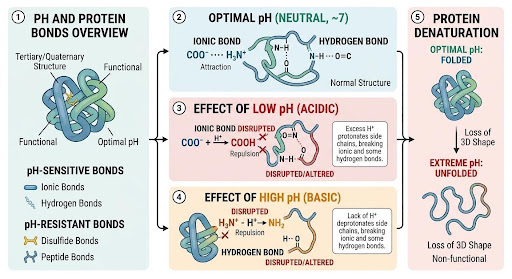
Relaxers sit at a very high pH, usually between 12 and 14. At that level the product swells the hair shaft and breaks the bonds inside it, which is exactly what you are paying for.
On skin, the same alkalinity strips protective oils and breaks down proteins in the outer layer. So when you ask why does my scalp burn during a relaxer, the answer is direct contact. Brief contact means irritation. Longer contact, or contact with broken skin, means a chemical burn from relaxer that reaches deeper.
Dermatologists make one point about alkaline injuries worth knowing: they keep working into the tissue after the first contact. That is why thorough rinsing matters more than people assume, and why burning easing off is not the same as damage stopping.
Normal Tingling vs a Dangerous Burn: Knowing the Difference
So is it normal for relaxer to burn? Mild, brief tingling is common, especially on a sensitive scalp. Pain is not.
Normal looks like faint warmth, a sensation that holds steady or fades, and no redness or broken skin. A possible burn looks like sharp or worsening pain, burning that spreads, redness, swelling or blisters, and stinging, scabbing or bleeding after rinsing.
The rule is simple: if it hurts rather than tingles, or it is getting worse rather than settling, the relaxer needs to come out. Nobody should sit through it because the service is already paid for or the appointment is running late.
Common Causes of Relaxer Burns
Scalp Sensitivity and Pre-Existing Irritation
An intact scalp is a barrier. A compromised one is not. Eczema, psoriasis, seborrhoeic dermatitis and plain dryness all weaken it, so chemicals reach living tissue faster. Harmattan is worth flagging, because a scalp already flaking in January is not in condition for a retouch. Some people are simply more reactive than others. That does not mean you cannot relax your hair. It means more protection, not more endurance.
Over-Processing and Leaving Relaxer On Too Long
Time is the biggest variable you control. Every extra minute is more contact between an alkaline product and your skin.
Home retouches are where this goes wrong: relaxer applied by a sister or a friend, timed by feel instead of a clock, stretched out because the parting is taking long. Rushing before an event does damage too, since a stylist against the clock is more likely to overlap onto previously relaxed hair. That adds nothing and increases both irritation and breakage.
Scratching or Open Sores Before Application
Scratching an itchy scalp on the morning of your appointment is one of the most common causes of relaxer scalp burn, and the easiest to avoid. The scratches are too small to see, but they are open routes past your skin barrier.
If you are wondering how to protect scalp before relaxing, most of it is restraint in the three or four days beforehand:
- Do not scratch, and treat itching gently rather than digging at it
- Take out protective styles at least 2 days before
- Skip vigorous brushing and combing
- Do not use anti-dandruff products at least a week before
- Avoid tight styles that pull on the scalp
- Do not wash your hair at least 2 weeks before the appointment, since your natural oils are part of the protection
- Reschedule if you have sores, scabs or an active flare-up
How to Prevent Relaxer Burns Before Your Next Touch-Up
No product or technique removes the risk completely. These steps genuinely reduce it.
Base Cream and Scalp Protection Techniques
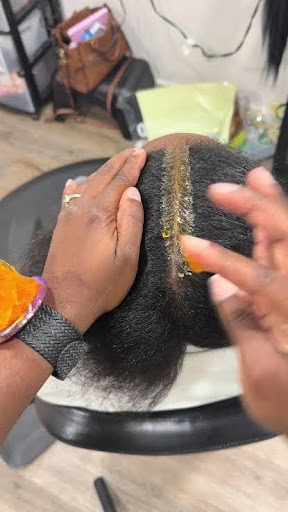
Applying base cream before relaxer is the most effective single step. It is a thick protective layer worked over the scalp, hairline, ears and nape before the relaxer comes near your head, putting a physical barrier between the chemical and your skin.
It is also the step most often skipped, because it takes time in a busy salon. Ask for it. If your scalp is sensitive, ask for it section by section as the stylist parts, rather than a smear at the hairline. Petroleum jelly gets used as a substitute and beats nothing, though a proper base stays put on the scalp.
Follow the instructions on the relaxer itself, strength included. MegaGrowth Relaxer, has 3 different strengths – Sensitive Care, Regular and Super to choose from depending on your hair texture. They give directions on strength and processing time for a reason, and a stronger formula than your hair needs is a common cause of irritation. Scalp-care essentials are in the MegaGrowth range.
Strand Testing and Timing
A strand test shows how your hair responds before you commit your whole head. It gives you a realistic processing time and flags sensitivity you did not know about.
Timing is very important, set a timer when the application starts, not when it finishes. Knowing how to apply relaxer without burning scalp comes down to two habits: base first, and rinse on time whether or not the hair looks straight yet. Under-processed hair can be fixed at your next retouch. A burn cannot.
Communicating with Your Stylist About Sensitivity
Tell your stylist before the service, not during it. Mention previous burns or relaxer irritation on the scalp, allergies, sensitive skin, and any scalp condition you are being treated for.
Ask to be told when the timer starts, and say plainly that you will speak up if it burns. Most stylists will work with you. The one who tells you to endure because it will soon finish is not one to keep. Of all the sensitive scalp relaxer tips going around, the most useful is being willing to say stop.
What to Do If You Experience a Relaxer Burn
Immediate Aftercare Steps
This is general information rather than medical care, but the order matters:
- Speak up immediately. Do not wait for the section to be finished.
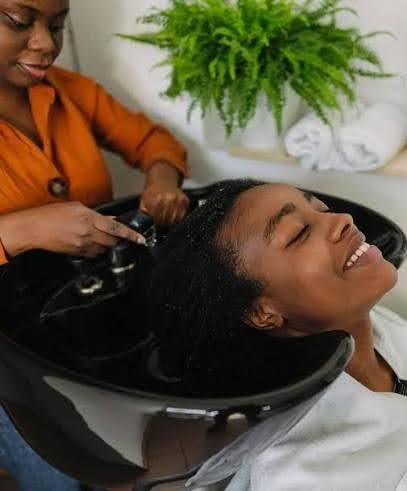
- Rinse with plenty of cool running water, longer than feels necessary. Alkaline residue keeps causing damage while it sits on skin.
- Neutralize with the neutralizing shampoo, following the product instructions.
- Leave the area alone. No scratching, no picking at scabs, no piling product on it.
- Keep it clean while it heals, and hold off on heat, colour and further chemical services.
On how to soothe a relaxer burn: relaxer burn treatment is not a home project. Vinegar, lemon, toothpaste, raw shea and similar remedies can irritate broken skin further. If something is going on the area, let a dermatologist or pharmacist say what.
When to See a Dermatologist
See a dermatologist, trichologist or your doctor if you have severe or spreading pain, blistering, open or weeping wounds, swelling that does not settle, signs of infection, tenderness lasting several days, or hair coming out from the affected area.
That last one is the reason not to wait it out. Deep burns can scar, and follicles inside scar tissue do not grow hair again. Getting seen early protects against damage that cannot be reversed.
FAQs
Is it normal for a relaxer to burn a little?
Mild, brief tingling is common on a sensitive scalp and usually fades. Actual burning pain is not normal and is not a sign the relaxer is working. Processing depends on chemistry and timing, not on how much it hurts. Pain that is sharp or worsening is a signal to rinse immediately.
How long should burning last during a relaxer?
There should not be burning during the relaxer service. Mild tingling that stays steady and settles after rinsing is the usual pattern. Burning that intensifies, spreads, or carries on after the relaxer has been rinsed and neutralized points to skin damage rather than sensitivity, and should be assessed by a medical professional.
Can relaxer burns cause permanent damage?
Most mild irritation heals fully within days once the chemical is off the skin. Severe chemical burns can scar, and scarred areas of the scalp may not grow hair again. Infection is possible where skin has broken. Rinsing quickly and getting proper care early are what make lasting damage unlikely.
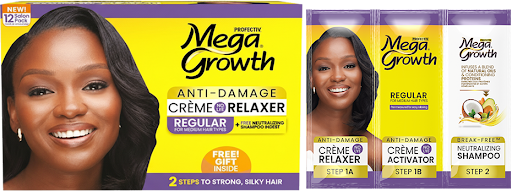
A relaxer is a chemical service, and treating it as one is most of the safety. Protect the scalp beforehand, respect the timing, and take burning seriously when it happens instead of waiting for the appointment to end. Browse the MegaGrowth range for the right relaxer strength, scalp care and maintenance products between touch-ups.