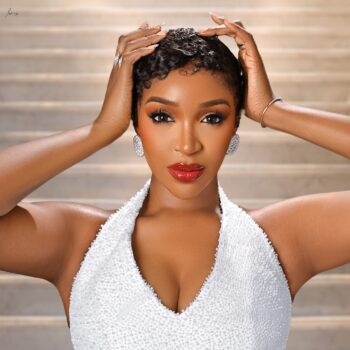
Have you ever wondered why actors look so perfectly the part on screen, whether they’re playing realistic roles or stepping into fantastical worlds? Behind every seamless transformation lies the artistry of skilled makeup professionals who turn imagination into reality. In Nollywood, one of the most remarkable talents leading that charge is Temitope Onayemi, better known as Adella Artistry. A self-taught makeup artist and SFX technician, she has become a creative force in the Nigerian film industry, known for her ability to blur the line between beauty and storytelling.
From the gritty realism of King of Boys to the ethereal transformations in Nneka the Pretty Serpent and To Kill a Monkey, Adella’s work builds worlds, evokes emotion, and helps define the visual language of modern African cinema.
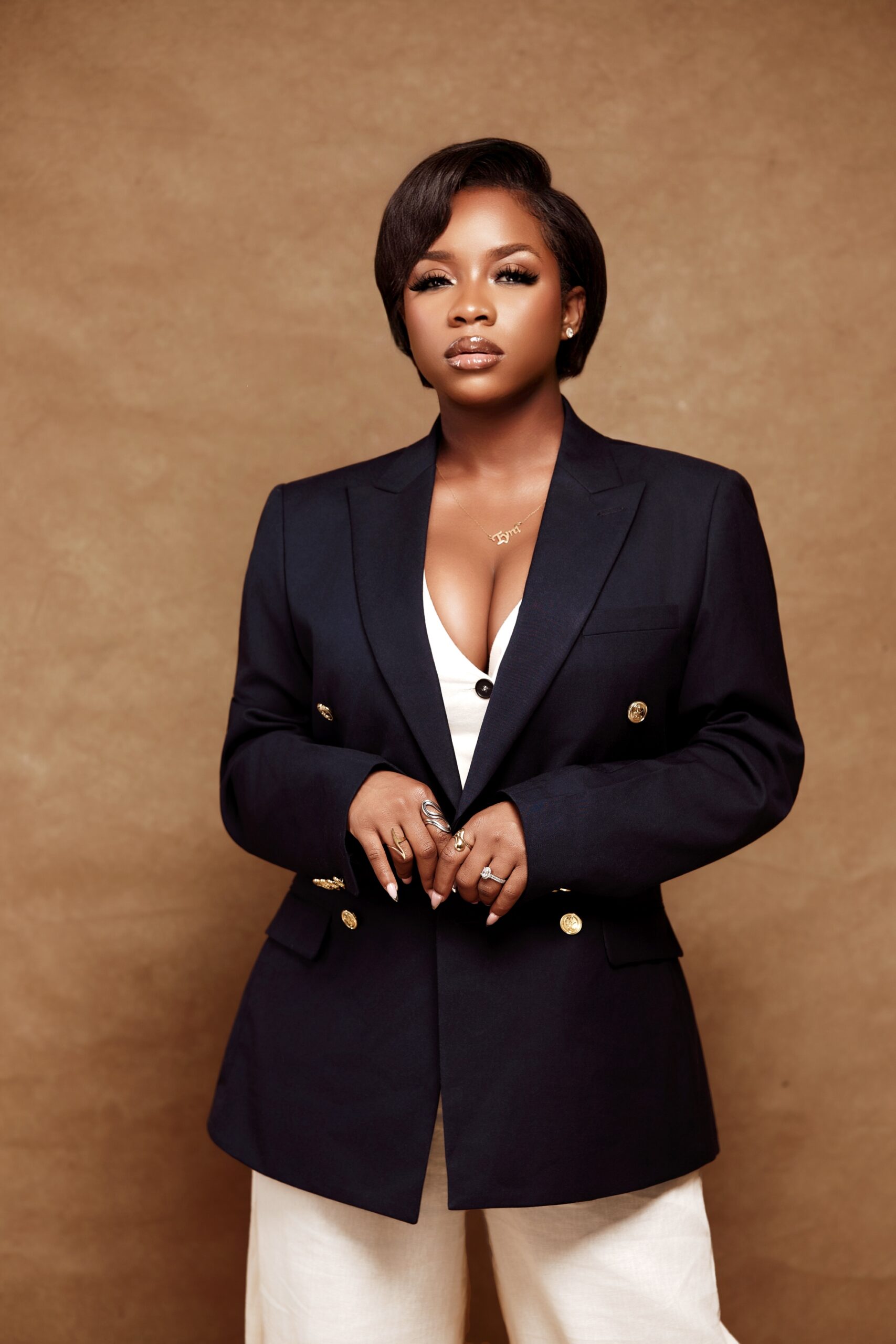
In this interview, we discuss how she started our, what makes her work distinct, and how the industry’s attitude has changed over the years.
Hi Temitope, how are you today?
Really good, thank you!
Great! Let’s start from the beginning. What drew you to makeup artistry initially, and how did you make the transition from general makeup into film work?
Art has always been my first language. I discovered my gift for sketching when I was about 11, and one of my teachers noticed and encouraged me. She even let me sketch her during class, and that confidence eventually led to winning competitions, including sketching the famous Longford Cathedral for my school in Ireland.
As I got older, my fascination shifted to the makeup I saw in movies and magazines. With my fine arts background, makeup came naturally, it felt like painting, except this time the face became my canvas. I would experiment by recreating celebrity looks, and before long, people started to notice.
At 19, I got my very first booking without ever putting myself out there, and that moment was a turning point. I’ve been self-taught from day one, and that first opportunity lit a fire in me that’s still burning almost 15 years later. Makeup gave me a new way to tell stories, to transform people, and to bring visions to life, and that’s what eventually led me into film.
When I look back now, the transition almost feels seamless. That’s the beauty of being rooted in your craft: the skills evolve, but the foundation never changes.
Inspiring. Was there a particular moment or project that made you realize this was your calling?
Definitely King of Boys with Kemi Adetiba. That project stretched me in every possible way. It was my first major film in Nigeria, and the demands were on a completely different level from creating flawless beauty looks to supporting with SFX transformations.
What really stood out was the trust Kemi placed in me. She handed me the responsibility of leading the makeup and SFX team without hesitation. On the outside, I kept it together and focused, but inside I knew this was a make-or-break moment.
That’s the thing with makeup for film, it’s not just about making someone look good; it’s about telling a story through every detail, every scar, every shade. Walking away from that project, I didn’t just feel accomplished; I felt aligned. It was the confirmation that this is more than a job for me, it’s a craft I was built for. And the best part is, when you’re truly in your element, even the hardest challenges start to look effortless.
So, your portfolio spans both on-screen beauty work and complex SFX. How do you approach switching between these very different skill sets?
For me, beauty and SFX are two sides of the same coin. Both are about storytelling.
With beauty makeup, the goal is refinement. It’s about enhancing the actor in a way that feels authentic to the character while also keeping them camera-ready. Often, less is more because the camera doesn’t miss a thing. It’s all about subtlety, precision, and restraint.
SFX, on the other hand, is where transformation takes center stage. It could mean creating injuries, aging someone decades, or completely reshaping their look to fit the narrative. It’s more technical, almost like a blend of art and engineering, and it demands patience and planning.
The way I switch between the two is through preparation. I spend time with the script, the mood of the scene, and the director’s vision before I ever pick up a brush or prosthetic. My fine arts foundation allows me to navigate both worlds, knowing when to be delicate and when to go bold. At the end of the day, my focus is simple: what will serve the story best?
View this post on Instagram
Looking at your work on films like King of Boys, Namaste Wahala, and To Kill a Monkey, which project are you most proud of and why?
For me, every single project has been a blessing. Each one is unique and has stretched me in different ways, so I honestly never take any of them for granted. I’m truly grateful to God for the chance to collaborate with such brilliant minds, men and women who are not only shaping Nollywood but also setting new standards for what’s possible.
Working on projects like these has required resilience, creativity, and leadership. Being trusted to lead makeup and SFX teams on such powerful scripts has been both humbling and affirming.
That said, I don’t measure pride by the size of the production. Whether it’s a small, intimate project or a big blockbuster, I approach them all with the same passion, focus, and gratitude. Because at the end of the day, each story deserves my very best.
What specific challenges or creative breakthroughs did that project present?
Films like To Kill a Monkey and Nneka the Pretty Serpent really pushed me to my limits in the best way. The biggest challenge was definitely time, working under very tight deadlines but still making sure every single look was flawless and true to the story.
Creatively, those projects were a breakthrough for me. They pushed me beyond traditional beauty makeup into story-driven transformations, from the most subtle changes to dramatic SFX that completely altered a character’s appearance. There were moments I felt out of my comfort zone, but that’s exactly where I grew the most.
Can you walk us through your creative process from script to screen. How do you collaborate with directors and actors to develop a character’s look, and how much creative input do you typically have in the final vision?
I’ve been fortunate to work with directors who trust me to design the makeup for their films from start to finish. My process always begins with the script. I study it closely to understand each character’s journey, their emotions, and how their look should evolve as the story unfolds.
From there, I sit with the director to see the characters through their eyes, because at the end of the day, makeup has to serve the bigger vision.
With actors, collaboration is just as important. I want them to feel confident and connected to their character, so I listen to their input while guiding them toward what works best on screen. That balance creates something authentic.
While the director always has the final say, I’m grateful that I usually have strong creative input. It allows me to add my own artistic touch while staying true to the story. And of course, none of it would be possible without my incredible team, we work seamlessly together to bring those visions from the page to the screen.
What’s the most technically challenging makeup you’ve had to create, and what approaches did you use?
The soothsayer’s look in Nneka the Pretty Serpent definitely stands out. I had very limited time to work, which added a lot of pressure. On top of that, Waje has beautifully smooth, youthful skin, so aging her convincingly, without it looking fake on camera, was a real challenge.
My goal was believability. I used the latex method alongside subtle textures, careful contouring, and color work to gradually build depth. The idea was to create realistic age lines that felt natural, not distracting. In the end, watching the transformation come alive on screen was incredibly rewarding.
How do you handle the pressure of time constraints on set while maintaining quality?
I actually thrive under pressure. The adrenaline that comes with tight deadlines pushes me to deliver my very best, and the satisfaction of seeing it all come together makes it worthwhile.
Early in my career, I was constantly being thrown into the deep end on sets where it felt like there was never enough time for hair and makeup. I used to ask myself,
“Why me? Why do I always get the toughest situations?”
Looking back now, I realize those moments were preparing me for the fast-paced demands of the film industry. Today, I’m grateful for those challenges because they shaped the artist and professional I am.
And I’m even more grateful for my incredible team, they take direction so well, and by delegating tasks based on everyone’s strengths, we’re able to work seamlessly together, maintaining quality even when time feels completely against us.
 Would you say the film industry’s approach to makeup and SFX changed since you started?
When I first started out, budgets were really tight and makeup was often treated like an afterthought. Things like aging, wounds, or fantasy characters had to be created with the most basic tools, and even when you tried to explain what it would actually take to achieve realistic results, a lot of people just couldn’t fully grasp it.
That’s why it’s so refreshing to see how much has changed. Today, SFX artists are finally being recognized, given better budgets, and trusted to bring their artistry to life on screen.
Watching productions not only value our work but also enhance it with incredible VFX to make it even more believable truly makes my heart sing.
What types of projects or genres are you hoping to work on next? Are there any dream collaborations or specific makeup challenges you’re eager to tackle in the coming years?
I’m really excited about exploring more fantasy and epic historical films, projects that push the boundaries of creativity with bold character transformations. I love the challenge of bringing larger-than-life stories to reality through makeup, whether it’s mythical beings, period characters, or futuristic worlds.
In terms of collaborations, I would love to work with visionary directors who aren’t afraid to dream big and tell African stories on a global scale. Our industry is evolving so fast, and I believe makeup has the power to elevate how our stories are seen and remembered.
Looking ahead, my biggest dream is simple: to keep challenging myself with projects that require both artistry and innovation, while training and inspiring the next generation of makeup artists.
Your writing is like a breath of fresh air in the often stale world of online content. Your unique perspective and engaging style set you apart from the crowd. Thank you for sharing your talents with us.
mufm44
TSanltYYZpNiicOgVJ
CyZrpFplbIwmnblhvzsA
Attractive section of content I just stumbled upon your blog and in accession capital to assert that I get actually enjoyed account your blog posts Anyway I will be subscribing to your augment and even I achievement you access consistently fast
tyenji
vz94j8
Your blog is a breath of fresh air in the often mundane world of online content. Your unique perspective and engaging writing style never fail to leave a lasting impression. Thank you for sharing your insights with us.
Hi, how have you been lately?
zHzFPhyTONEHNlBpiXymKPN
FbKujQAUVachZhxfnbzCBUX
Nice blog here Also your site loads up very fast What host are you using Can I get your affiliate link to your host I wish my site loaded up as quickly as yours lol
fck57d