




For years, the only time most people considered renting a dress was for wedding/one off ceremonies. Bridal rentals were the norm, as elaborate, heavily beaded pieces that cost a small fortune to buy outright and would only be worn once. Rental made obvious sense. You paid a fraction of the purchase price, wore the piece for your special day, and handed it back without the headache of storage or the guilt of a dress collecting dust.
In recent times, the rental conversation in Lagos has moved beyond bridal wear and is now firmly in everyday, or at least every-occasion, territory. Birthday parties, owambe celebrations, corporate events, weddings as guests rather than brides: Lagos women (and increasingly, men) are now asking whether they need to own every look they step out in. The answer, more and more, is no.

The Naira Reality
A large part of this shift is economic. Nigerian designer pieces from labels like Fruché, Lisa Folawiyo, or Eki Kere can cost anywhere from ₦150,000 to well over a million naira, pricing most shoppers out entirely. International designer pieces? Even further out of reach, especially with the naira’s recent turbulence against the dollar. Rental suddenly makes the maths work. You can step out in a stunning piece by your favourite designer for a fraction of what it would cost to own, wearing the label without the financial hangover.
Beyond economics, there is a growing environmental case for rental fashion. The fashion industry is responsible for approximately 10% of annual global carbon emissions and consumes 93 billion cubic metres of water per year, according to the UN Environment Programme. Fast fashion has trained consumers to treat clothes as disposable, wearing pieces once or twice before discarding them. However, the rental model pushes back against that habit. When a dress is rented rather than bought, its lifecycle extends dramatically. It is worn, cleaned, and worn again by someone new, reducing the demand for constant new production.
For Lagos, a city deeply embedded in aso-ebi culture where entire families commission matching fabrics for every major celebration, the volume of single-use clothing is staggering. Rental offers an off-ramp from that cycle without asking anyone to sacrifice their style or their cultural participation.
View this post on Instagram
How People Really Feel About It
Bring up renting a dress in conversation, and you will hear a full spectrum of reactions. Some are enthusiastic converts; they love the freedom of wearing something new every time without the spending guilt. Others are more cautious, admitting a slight discomfort with the idea of wearing something that has been on someone else’s body. Hygiene is a concern that comes up often.
Others simply feel the stigma of it. There is still a cultural narrative in Nigeria, as there is in many places, that wearing borrowed things signals financial weakness. “People will know” is a real anxiety. But that narrative is softening, particularly among younger, urban Lagosians who have reframed rental as a smart, intentional choice rather than a last resort.
How Rental Spaces Build Trust
The good rental businesses in Lagos understand that trust is everything. Without it, the whole model collapses. This is why the reputable players have built physical showrooms — spaces where clients can come in, touch the fabric, try on the garment, see the quality for themselves before committing. This single feature addresses multiple anxieties at once: the hygiene question, the fit question, and the general uncertainty of receiving something you have only seen on a screen.
View this post on Instagram
Platforms like The Tilayo Showroom have leaned into this. They operate a showroom, collect identification documents from renters, and have built a process that makes the transaction feel formal and accountable, not casual. Collecting IDs is particularly important, as it creates a paper trail, deters careless handling of the pieces, and gives lenders peace of mind. READ (Rent a Dress) does something similar, combining a visible inventory with verification processes that protect both the renter and the person who owns the dress.
Cleaning and garment care are also taken seriously. Pieces are professionally laundered between rentals, which should, logically, mean they are cleaner than most things sitting at the back of a personal wardrobe. The best rental spaces make this part of their pitch rather than hiding it.
Rent Out Your Own Wardrobe
Perhaps the most interesting development in Lagos rental fashion is the peer-to-peer dimension. It is no longer just businesses with large inventories renting to consumers. Individual women with beautiful, rarely-worn pieces can now list their own dresses through rental platforms, earning passive income while the items would otherwise hang unused.
The economics are straightforward: the platform takes a small commission, the dress owner earns money from something they already own, and the renter gets access to a real wardrobe with a personal history rather than a mass inventory. For fashion lovers who have spent years building a wardrobe they cannot bear to sell, this is particularly a game-changer. You do not have to part with your pieces permanently. You simply share them temporarily, earn something from the loan, and get them back.
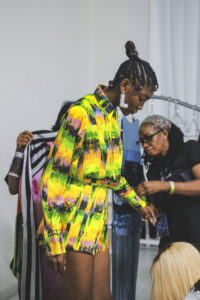
The consumer-to-consumer segment of clothing rental is anticipated to witness the fastest growth globally in the coming years, supported by the increasing popularity of peer-to-peer platforms that enable users to rent, lend, and monetise their personal wardrobes while promoting sustainability.
Lagos has always known how to dress. The city’s relationship with fashion is passionate, competitive, and deeply communal. Rental fashion offers to that culture a smarter, more sustainable, more financially sensible way to keep showing up and showing out.
Featured Image: Lisa Folawiyo in Lisa Folawiyo x Amina Muaddi at Marrakech
I’m curious about the specific technological advancements being used to manage these complex projects now. Seeing the recent kentsel dönüşüm haberleri, it feels like things are moving incredibly fast.