



Ever bought something online that looked perfect in the photos, only to receive it and think “this feels… cheap”? Nine times out of ten, the problem isn’t the design. It’s the fabric composition, and it’s usually listed right there in the product description, completely ignored by most shoppers.
Once you learn to read that little “95% Cotton, 5% Elastane” line, you start shopping like someone who actually knows what they’re doing.

What These Fabrics Actually Are
Cotton is a natural fiber from the cotton plant. It’s breathable, soft, and gets even softer with washing, though it wrinkles easily and can shrink if it hasn’t been pre-treated. A hundred percent cotton is great for t-shirts and button-downs, but since it lacks stretch, fitted pieces made from it can feel restrictive. Linen is also a natural fiber, made from the flax plant, and it’s even more breathable than cotton with a slightly rougher, textured feel. It wrinkles constantly, which is really part of its charm rather than a flaw, and it works beautifully in hot weather. Just don’t expect a fully linen piece to stay crisp all day, since it creases within the hour.
Polyester is a synthetic fiber made from petroleum-based plastic. It’s durable, resists wrinkling, and holds color well, but it doesn’t breathe the way natural fibers do and can feel plasticky or make you sweat if it’s a low-quality version. High-quality polyester, especially when blended or brushed, can actually mimic silk surprisingly well, which is how you end up with affordable, silky-feeling slip dresses and blouses.
Elastane is where a lot of confusion comes in, mostly because of Lycra. Lycra is simply a brand name for elastane, made by the same company that originally invented it. Chemically, they’re the same fiber, just marketed differently. Elastane is rarely used on its own; it’s usually blended in at small percentages, somewhere between two and ten percent, to give a fabric stretch and recovery, meaning it snaps back into shape after you move. That’s the whole reason your jeans don’t bag out at the knees by the end of the day. As for “polystane,” that’s not actually a standard textile term, so you’re probably thinking of a poly-elastane blend, which is extremely common in activewear, leggings, and fitted dresses, often showing up as something like ninety-two percent polyester and eight percent elastane.
What the Percentages Actually Tell You
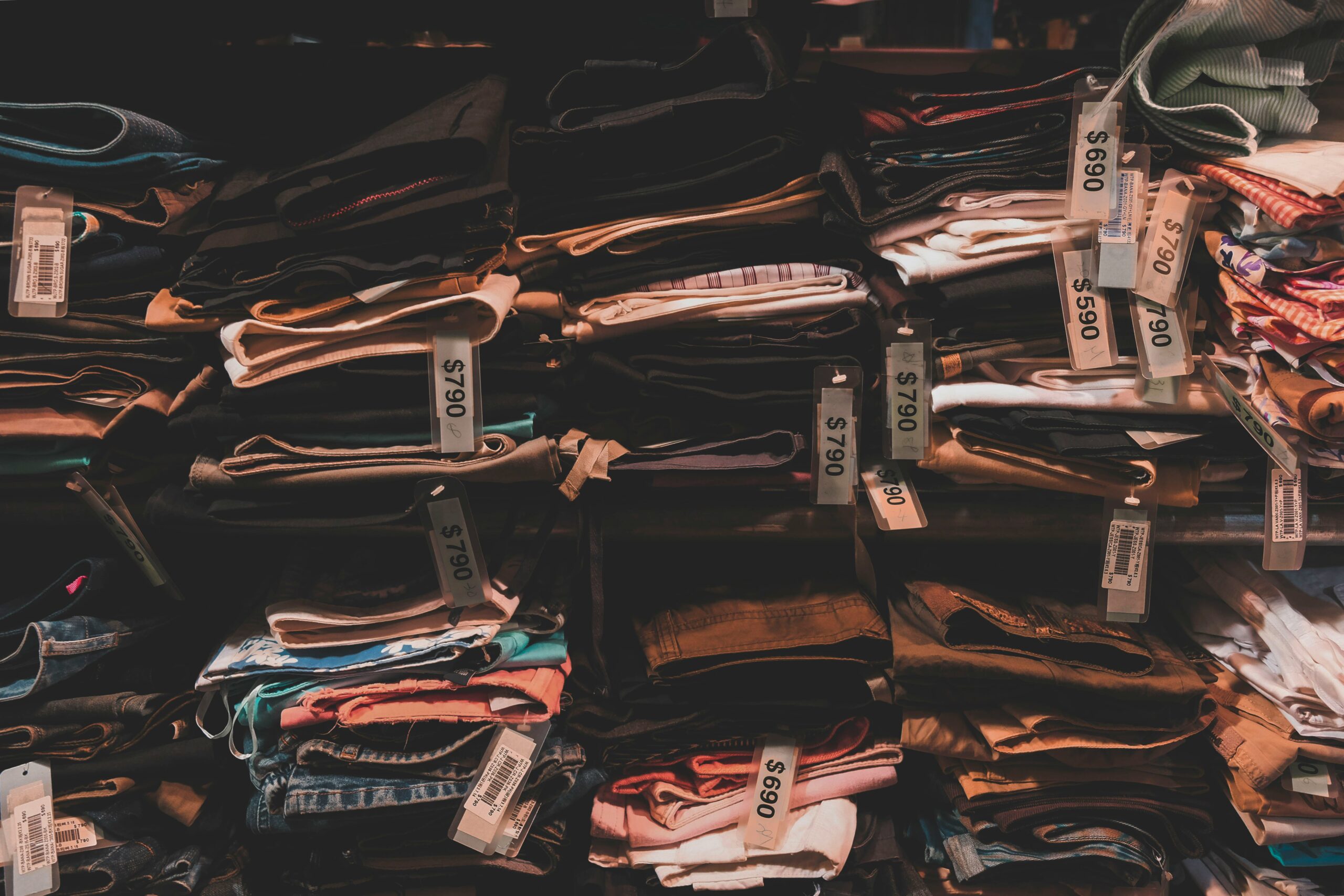
A higher elastane content, say eight percent or more, means a very stretchy, form-fitting fabric, ideal for leggings, bodycon dresses, and swimwear. But too much elastane in a woven fabric, as opposed to a knit, can start to look and feel cheap and synthetic. Cotton with a small amount of elastane, around two to five percent, is the sweet spot for jeans and fitted trousers that hold their shape without turning shapeless after a few wears. Meanwhile, a hundred percent cotton or linen piece, with no stretch at all, tends to look more structured and expensive, because the drape comes from the fabric itself rather than synthetic give. And blends that lean heavily polyester, sixty percent or more, are common in fast fashion. That’s not automatically a bad thing, but low-quality polyester is usually the culprit when clothes look shiny, feel synthetic, or start pilling after just a few washes.
Matching Fabric to Outfit
A tailored blazer or pair of trousers looks best in wool, or a wool-polyester blend that’s still mostly wool, because it holds structure and doesn’t wrinkle in transit. A summer shirt calls for linen or a linen-cotton blend, prioritizing breathability and texture over stretch. Fitted jeans work best with a small amount of elastane added to cotton, giving you shape retention without sacrificing that classic denim feel. A bodycon dress benefits from a poly-elastane blend, since the stretch creates that smooth, second-skin silhouette. If you’re after a slip dress with that silky drape, look for viscose or actual silk, or a high-quality polyester where drape matters more than stretch. Everyday t-shirts are best in cotton or a cotton-modal blend, since you want breathability and softness without unflattering clinginess. And for activewear or leggings, a poly-elastane or nylon-elastane blend gives you the stretch, recovery, and moisture-wicking you actually need for movement.
How to Avoid the “Cheap” Look When Shopping Online
Get in the habit of checking the composition before you even look at the price. A dress made from a hundred percent polyester with zero stretch, but styled to look fitted, is probably going to look stiff and shiny once it arrives. Be especially cautious of high polyester content in woven fabrics like shirts or trousers, since that’s where synthetic material looks cheapest, with no natural drape to soften it. Elastane is generally your friend in knitwear, but not necessarily in structured pieces; a little stretch in a t-shirt is great, but too much stretch in something meant to be a tailored blazer will make it look flimsy rather than polished. Blends where the natural fiber dominates, meaning cotton or wool makes up sixty percent or more, tend to look and feel noticeably better than blends that lean synthetic. And keep an eye out for viscose or rayon, since these are natural-based fabrics that mimic silk beautifully, giving you an elegant, drapey feel at a much lower price point than real silk, without the plasticky quality polyester can have.
The Bottom Line
Fabric composition is basically the nutrition label of clothing. Most people scroll right past it, but it tells you almost everything about how a piece will actually look, feel, and hold up over time. Once you start factoring it in alongside the photos and reviews, you’ll return far fewer online orders and build a wardrobe that genuinely looks and feels as good as it did on the model.
Featured Image: Photo by Ekaterina Grosheva on Unsplash
Llevo un par de meses en 888starz y la verdad entré con la mosca detrás de la oreja, porque aquí en España uno se cansa de casinos que prometen mucho. El registro me llevó un rato mínimo, correo y contraseña y ya está, y el mínimo para depositar está en 1 euro, cosa que agradezco para tantear.
De slots hay una barbaridad — creo que pasan de 8.000 juegos entre Pragmatic Play, NetEnt, Play’n GO, Betsoft y Yggdrasil. Yo tiro mucho de Sweet Bonanza y Book of Dead, si bien de vez en cuando pruebo cosas de Big Time Gaming. La pega es que el buscador va un poco lento cuando el catálogo es tan bestia.
El casino en directo corre a cargo de Evolution y ahí no hay queja: ruletas con crupieres de verdad, los game shows tipo Crazy Time si te va el rollo espectáculo. La oferta de entrada es de un 130% y unas 100 tiradas gratis, con un rollover de x40, que no es regalado pero tampoco un robo. Suele haber algún free spin sin depósito, puedes mirar los términos actualizados directamente en [url=https://888starz-es1.com]888starz online[/url] antes de registrarte.
El tema de sacar pasta va bastante fino. Retiré la semana pasada con Skrill y lo tuve en 40 minutos. Con Visa tarda más, nada nuevo. Tienen Neteller, Bitcoin y USDT y ahí es donde vuela de verdad.
Desde el móvil funciona bien, hay APK para Android aunque la web móvil me va igual de bien. El chat de ayuda está en español, tardaron unos 10 minutos con una duda de documentación. Operan con licencia de Curazao, que no es la DGOJ y hay que saberlo antes de entrar. Yo sigo ahí, con sus cosas, pero ojo con el rollover de las promos.
Vengo jugando como cinco meses en 888starz y para que mentir no esperaba gran cosa, porque por aqui uno se cansa de paginas que venden humo. El registro me llevo tres minutos, los datos basicos y fuera, y el deposito minimo esta en unos pocos euros, que para probar viene de lujo.
De tragaperras van sobrados — creo que pasan de 8.000 titulos entre Pragmatic Play, NetEnt, Play’n GO, Betsoft y Yggdrasil. Yo me quedo en Gates of Olympus y Sweet Bonanza, aunque de vez en cuando pruebo cosas de Big Time Gaming. Lo que si encontrar un juego concreto es un lio cuando tienes 8.000 cosas delante.
La parte de crupier real esta llevada por Evolution y se nota la diferencia: mesas con crupier en espanol, Crazy Time si te va el rollo espectaculo. La oferta de entrada ronda el 130% y unas 150 tiradas, hay que apostarlo x40, nada raro comparado con otros. Suele haber algun free spin sin deposito, puedes mirar las condiciones exactas directamente en [url=https://888starz-es5.com]1xbet 888starz[/url] antes de registrarte.
El tema de sacar pasta va bastante fino. Saque el otro dia via e-wallet y entro casi al momento. Por Visa o Mastercard hay que esperar unos dias, como en todos lados. Tienen Neteller, Bitcoin si no te asusta el tema.
El movil cumple, hay APK para Android si bien la version web hace el mismo apano. La atencion al cliente esta en espanol, me atendieron rapido la vez que tuve un lio con la verificacion. La licencia es de Curazao, que no es la DGOJ y hay que saberlo antes de entrar. Por ahora no me ha fallado, pero ojo con el rollover de las promos.
Vengo jugando casi medio ano en 888starz y la verdad tenia dudas al principio, ya que en Espana te cansas de sitios que se caen cada dos por tres. Abrir la cuenta me llevo un rato minimo, correo y contrasena y ya esta, y el deposito minimo esta en 1 euro, asi puedes tantear sin jugarte el sueldo.
De slots van sobrados — andan por mas de 7.000 slots repartidos entre Pragmatic Play, NetEnt, Play’n GO, Betsoft y Yggdrasil. Yo me quedo en Book of Dead y Gates of Olympus, aunque tambien le he dado a cosas de Big Time Gaming. Lo que si encontrar un juego concreto es un lio cuando hay tantisimo.
La zona en vivo es de Evolution, basicamente y ahi no hay queja: ruletas con crupieres de verdad, Crazy Time para el que le guste el show. La oferta de entrada ronda el 100% hasta 300€ con 150 giros, el wagering esta en x40, nada raro comparado con otros. Suele haber alguna promo sin deposito, yo miraria lo que hay vigente desde [url=https://888starz-es3.com/no-deposit-bonus]888starz no deposit[/url] antes de meter dinero.
El tema de sacar pasta me ha ido mejor de lo que pensaba. Saque la semana pasada via e-wallet y lo tuve en 40 minutos. Por Visa o Mastercard tarda mas, nada nuevo. Aceptan tambien Neteller, Bitcoin y USDT y ahi es donde vuela de verdad.
El movil va suave, la app de Android existe pero yo uso el navegador y me sobra. El soporte esta en espanol, me atendieron rapido la vez que tuve un lio con la verificacion. Operan con licencia de Curazao, que no es la DGOJ y hay que saberlo antes de entrar. Por ahora no me ha fallado, pero ojo con el rollover de las promos.
Right — have been messing about with this thing for maybe a few months now and it’s basically bookmarked at this point, so figured I’d say something since someone asked me a few days back. Am UK based, mostly bet football and racing, a fiver here and there, for context.
The reason I started using it was actually embarrassing — I could never work out what an ew payout actually was with 1/5 odds a place. I’d just eyeball it and moan when the payout landed. Now type the odds in before I place anything, even a straight one-selection punt.
Their single bet calculator is the one I’m on daily — type in your stake, the odds and you get profit and total return with no faffing, fractional or decimal, doesn’t matter. It also handles the fiddly ones — trebles maths, lucky 15s, a yankee, honestly that’s where most people I know lose track. Have a go yourself, it’s over at [url=https://single-calculator.com]singles calculator[/url] and there’s no login wall, which I appreciated.
What genuinely changed how I bet is the geekier extras. There’s an odds-to-probability converter and it makes obvious how much the bookie’s taking, and there’s the kelly staking tool — I use half kelly since full stakes are far too aggressive. The dutching one gets used a fair bit for when I’m splitting a race.
It’s not perfect mind. Its design looks very functional, let’s say — no frills, it’s clearly function over form. Phone-wise it’s fine although the acca grid make you pinch and zoom. Also there’s nothing on the app store, it’s a website and that’s it — doesn’t bother me but worth saying.
Anyway. Free, not plastered in adverts, does what it says. If you even now does the maths on paper, try it — saved me plenty of “wait, that’s it?” moments.
Ya llevo casi medio ano con 888starz y para que mentir entre con la mosca detras de la oreja, ya que por aqui te cansas de casinos que prometen mucho. Darse de alta no me llevo ni un rato minimo, correo, contrasena y listo, y el minimo para depositar esta en 1-2 euros, cosa que agradezco para tantear.
De slots hay una barbaridad — andan por mas de 7.000 juegos entre Pragmatic Play, NetEnt, Play’n GO, Betsoft y Yggdrasil. Yo me quedo en Gates of Olympus y Sweet Bonanza, eso si de vez en cuando pruebo alguna de Microgaming. La pega es que el filtro por proveedor a veces se atasca cuando el catalogo es tan bestia.
El casino en directo corre a cargo de Evolution y se nota la diferencia: blackjack con gente real, los game shows tipo Crazy Time que enganchan una barbaridad. El paquete de bienvenida es de un 130% con 100 tiradas gratis, con un rollover de x40, que es lo normal del mercado. Suele haber algun free spin sin deposito, puedes mirar las condiciones exactas en [url=https://888starz-es2.com]888starz online[/url] antes de registrarte.
Los cobros es lo que mas me ha sorprendido. Cobre la semana pasada por Skrill y lo tuve en 40 minutos. Con tarjeta se va a dos o tres dias, como en todos lados. Tienen Neteller, cripto y ahi es donde vuela de verdad.
Desde el movil cumple, la app de Android existe si bien la version web hace el mismo apano. El chat de ayuda responde en espanol, no fue instantaneo pero tampoco eterno la vez que tuve un lio con la verificacion. Operan con licencia de Curazao, no esta regulado por la DGOJ espanola y eso cada uno que lo valore. A mi de momento me ha respondido, aunque las promos hay que leerlas con lupa.
Thanks for the sensible critique. Me and my neighbor were just preparing to do some research on this. We got a grab a book from our local library but I think I learned more from this post. I am very glad to see such fantastic information being shared freely out there.