




If skincare TikTok and Twitter have taught us anything, it is that there is apparently a new ingredient we should all be using every week.
One person is telling you that you need retinol. Another has discovered a miracle serum for hyperpigmentation. Someone else is recommending a chemical peel, while an influencer with seemingly perfect skin is convincing you that your entire routine needs to be replaced.
And somewhere in the middle of all this advice, you are left wondering: Do I actually need all of this?
The truth is, great skin does not necessarily require a shelf full of expensive products, a prescription or regular trips to a clinic. Sometimes, a simple drugstore routine is more than enough. Sometimes, your skin needs something stronger and more targeted. And sometimes, the best thing you can do is stop experimenting and see a professional.
The trick is knowing which category your skin actually falls into.
 First things first: skincare is not just beauty
We have become much better at talking about skincare as part of everyday self-care, and that is a good thing.
Social media has encouraged more people to moisturise, wear sunscreen, understand ingredients and pay attention to changes in their skin. It has also helped move us further away from damaging ideas around skin bleaching and constantly trying to change our natural complexion.
But there is another side to the conversation that we need to acknowledge: some skincare products are effectively doing the work of medicine.
Ingredients such as retinoids, benzoyl peroxide and prescription treatments can be used to manage acne and other skin concerns. Retinoids, for example, have been used medically for decades and can help with acne, pigmentation and signs of ageing.
That means the fact that someone on TikTok has used something successfully does not automatically mean it is the right thing for your skin. Your skin is not a trend.
So, what is drugstore skincare actually good for?
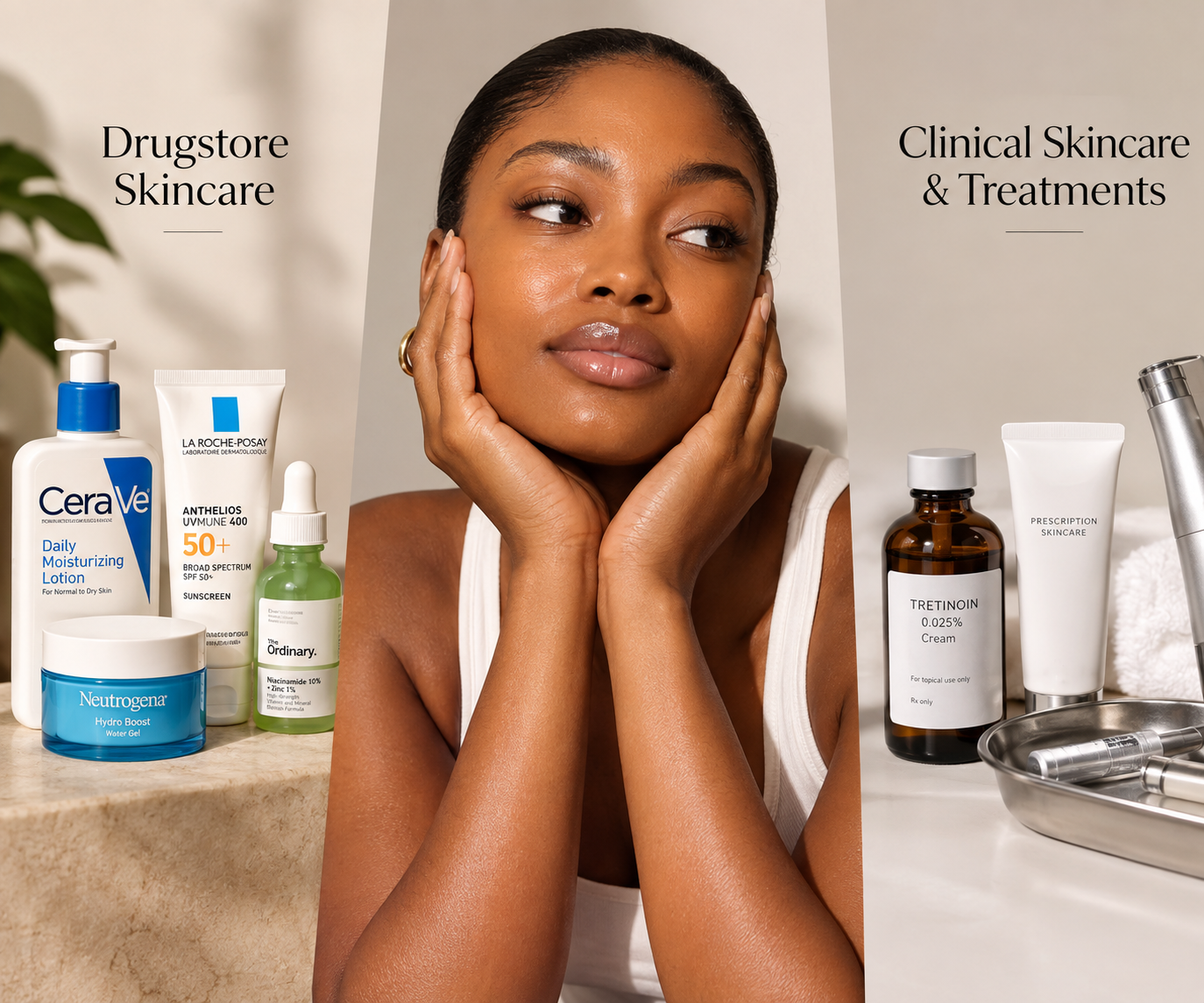
For many people, a good basic routine is enough. Think cleanser, moisturiser and sunscreen. Depending on your concerns, you might add one targeted product, such as a vitamin C product, salicylic acid or a retinol.
Drugstore skincare can be particularly useful when your concerns are relatively straightforward: dryness, mild oiliness, maintaining your skin barrier, basic sun protection or mild breakouts.
And “drugstore” does not mean ineffective. There are plenty of affordable products containing well-researched active ingredients. For example, mild acne can often be managed with over-the-counter products containing ingredients such as adapalene, benzoyl peroxide or salicylic acid. The bigger mistake is assuming that because a product is affordable, you need to use five more products to compensate for it.
You don’t.
Clinical skincare is where things become more targeted
Then there is clinical or dermatologist-led skincare. This is where your routine starts being built around a specific concern rather than whatever ingredient is trending online. Depending on your skin, this could involve prescription-strength retinoids, acne medication or targeted treatment for pigmentation and other conditions.
The biggest advantage is not necessarily that these products are more expensive or more powerful. It is that someone has assessed what your skin actually needs.
That distinction matters.
If you have mild breakouts, experimenting carefully with an over-the-counter acne product may be reasonable. But if you have painful, deep acne, acne that is leaving scars or persistent dark marks, dermatologists recommend seeking professional treatment rather than simply cycling through products from the shop.
And for darker skin tones, this is particularly important. Inflammation from acne can lead to post-inflammatory hyperpigmentation, meaning the breakout may disappear but the mark it leaves behind can stay for much longer.
Then there are in-clinic treatments
This is where things like chemical peels, lasers and other professional procedures come in. And this is also where we need to stop treating skincare like a DIY project. An in-clinic treatment can be fantastic for the right person and the right concern, but more treatment does not automatically mean better skin.
Chemical peels, for example, can be used to address acne, discoloration, uneven skin tone, melasma, rough texture and signs of sun damage. But the result depends heavily on the treatment selected and the expertise of the person performing it. So if you are considering an in-clinic treatment, the consultation should come before the treatment. Not after you have already paid.
How do you know when it is time to see a professional?
A simple rule: if you have been trying to fix the same problem repeatedly and it is not improving, stop throwing products at it. Persistent acne, significant scarring, stubborn pigmentation, recurring irritation or a skin concern that keeps getting worse are all good reasons to seek professional advice.
The same applies when your routine is becoming ridiculously complicated.
If you have bought eight different products because TikTok told you that you need one for every possible skin concern, but your skin is now irritated, dry, breaking out or constantly changing, it may be time to step away from the skincare shelf. Sometimes the answer is not another serum. It is a diagnosis.
And when should you not start anything new?
When your skin is doing perfectly well.
We have somehow convinced ourselves that skin always needs to be brighter, smoother, tighter, clearer or more “glowy”. But if your skin is comfortable, healthy and your current routine works for you, you do not have to fix what isn’t broken.
You don’t need retinol because everyone else is using it. You don’t need an acid because someone called it a game changer. You don’t need a 12-step routine because someone’s bathroom shelf looks impressive on Instagram.
And you certainly don’t need to keep changing products every two weeks because you haven’t woken up with perfect skin yet.
Some skincare treatments take weeks or months to show results, and constantly switching products can cause irritation rather than improvement.
The basics still matter more than the hype
For all the complicated skincare conversations happening online, the fundamentals remain remarkably simple. Cleanse. Moisturise. Protect your skin from the sun. Treat specific concerns when necessary.
Sunscreen, in particular, is one of the most worthwhile habits you can build. Regular sunscreen use helps protect against sunburn, premature skin ageing and can also help prevent dark spots from becoming worse. (
And if you are treating pigmentation, sunscreen is not an optional extra. Dermatologists consider sun protection an important part of managing dark spots.
If you can afford a consultation, it is a 10/10 investment
There is nothing wrong with learning about skincare online. In fact, social media has made an enormous amount of useful information more accessible.
But there is a difference between learning about your skin and diagnosing your skin from a 30-second video.
If you can afford to see a qualified dermatologist or reputable skin professional, a consultation can save you money in the long run. Instead of buying every product recommended by an influencer, you can find out what you are actually treating, what your options are and what you realistically need.
Great skin does not mean poreless skin. It does not mean never breaking out, having completely invisible pigmentation or looking like you have a permanent beauty filter switched on. The goal should be healthy, comfortable skin that you understand how to care for.
So keep the moisturiser. Wear the sunscreen. Enjoy your favourite serum if it works for you. Take skincare advice online with a healthy dose of curiosity. And when your skin is asking for more than a TikTok routine can provide, let a professional take it from there.