
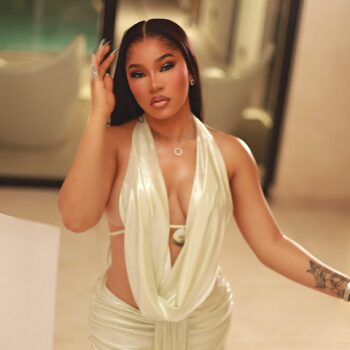


African skincare is having its moment, and few brands have captured the conversation quite like Uncover Skincare. Founded by Jade Oyateru and Sneha Mehta, the brand has quickly grown into an African skin favourite by creating products that put melanated skin at the centre.
Building a bridge between two worlds, Uncover is building a skincare range around the realities of African skin, bringing together the continent’s rich botanical ingredients with Korean skincare technology. It’s consumer favourites, include its iconic sunscreen, formulated without the dreaded white cast, to targeted solutions for hyperpigmentation, acne and dehydration, and many more.
But behind the products is a bigger story about representation, and building a beauty brand for a market that has long been underserved. We sat down with co-founder Jade Oyateru to talk about the experience that sparked Uncover, the thinking behind its formulations, the challenges of building across African markets and how the brand is staying true to its purpose as it grows.
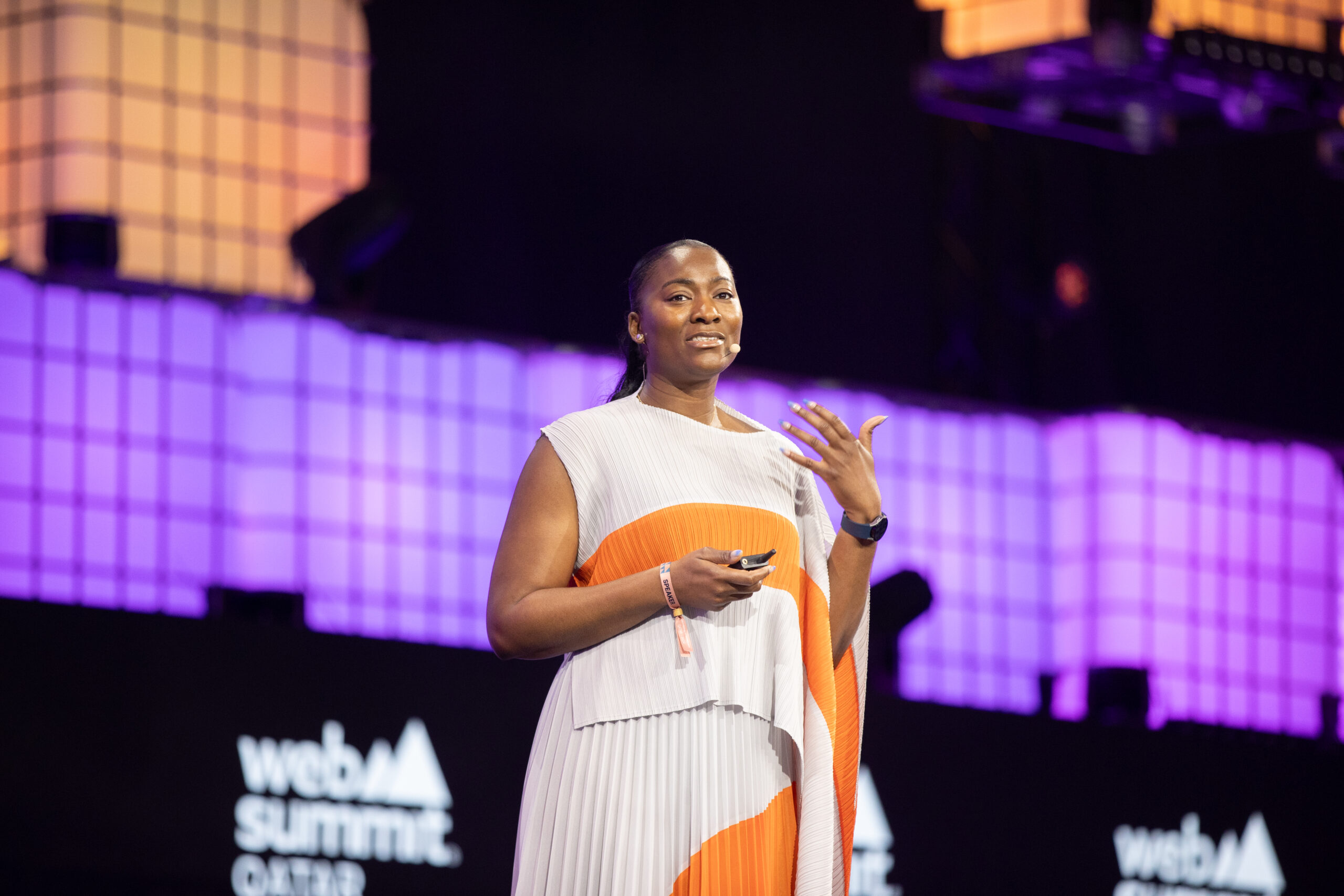
Hello Jade, thank you for joining us today
Hello! I am happy to be here.
Let’s start at the beginning. What was happening in the skincare space that made you and Sneha think, “We need to build something for African women”?
Well, we could see that African women were investing heavily in skincare, yet very few brands were truly creating products with our skin tones, climates and concerns in mind. We were expected to choose from what was already available and somehow make it work for us.
That gap became very personal through my cofounder Sneha’s experience. She struggled with severe acne and tried product after product, but many of the harsh treatments available did not solve the problem. Instead, they burned and damaged her skin, creating even more inflammation and hyperpigmentation.
Her experience reflected what so many women across Africa were going through. That was the real catalyst for Uncover: the belief that melanated skin should be the starting point in product development, not an afterthought.
 Once you knew you wanted to create products specifically for African skin, how did you decide what actually went into them? Baobab, shea, rooibos, Korean skincare technology… how did that combination come together?
We always start with the skin concern, not with a trendy ingredient. Africa is extraordinarily rich in botanicals that have been used for generations, so we research what each one can genuinely do for the skin. Baobab supports brightening and glow, rooibos offers antioxidant protection, and shea provides deep nourishment and moisturization.
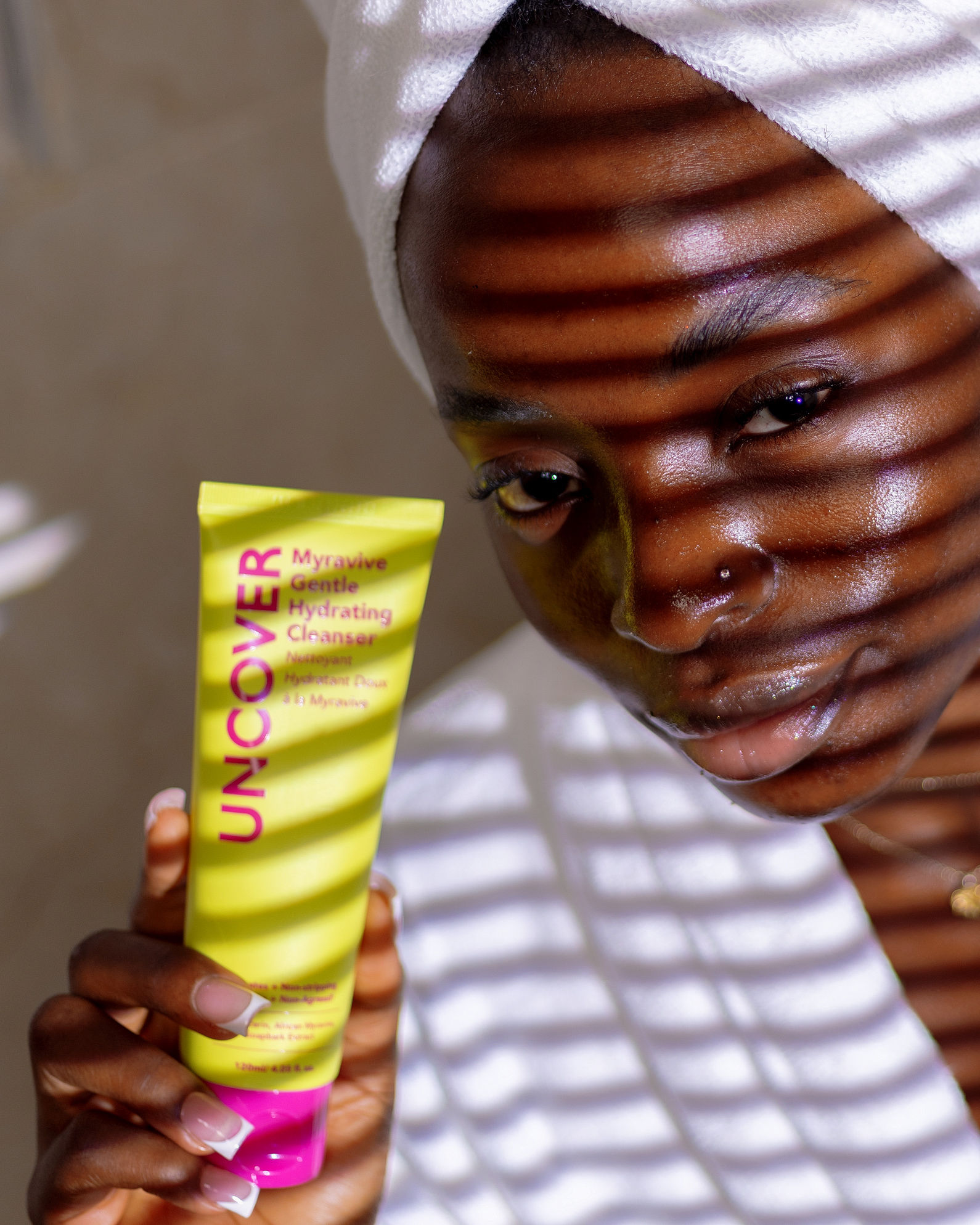
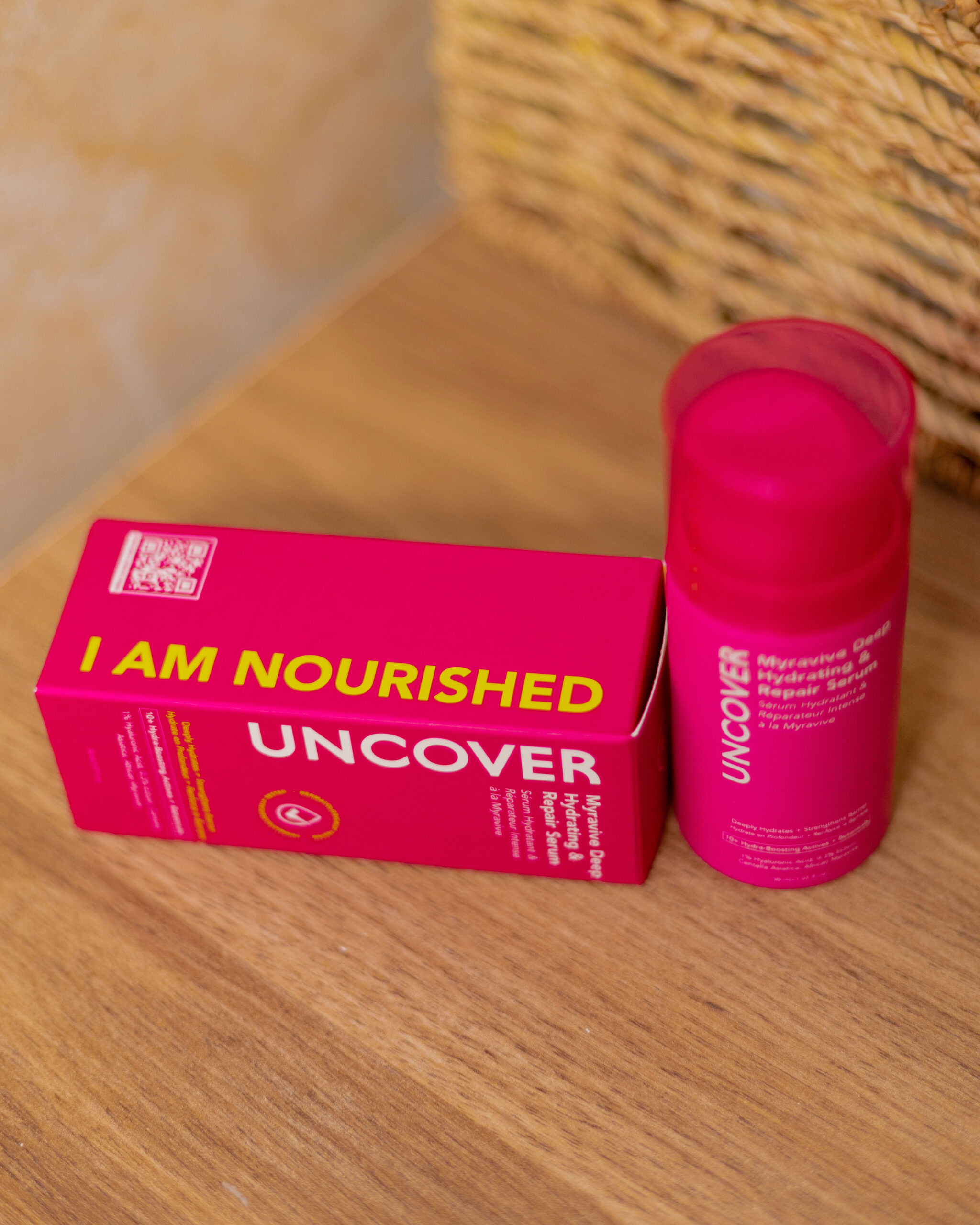
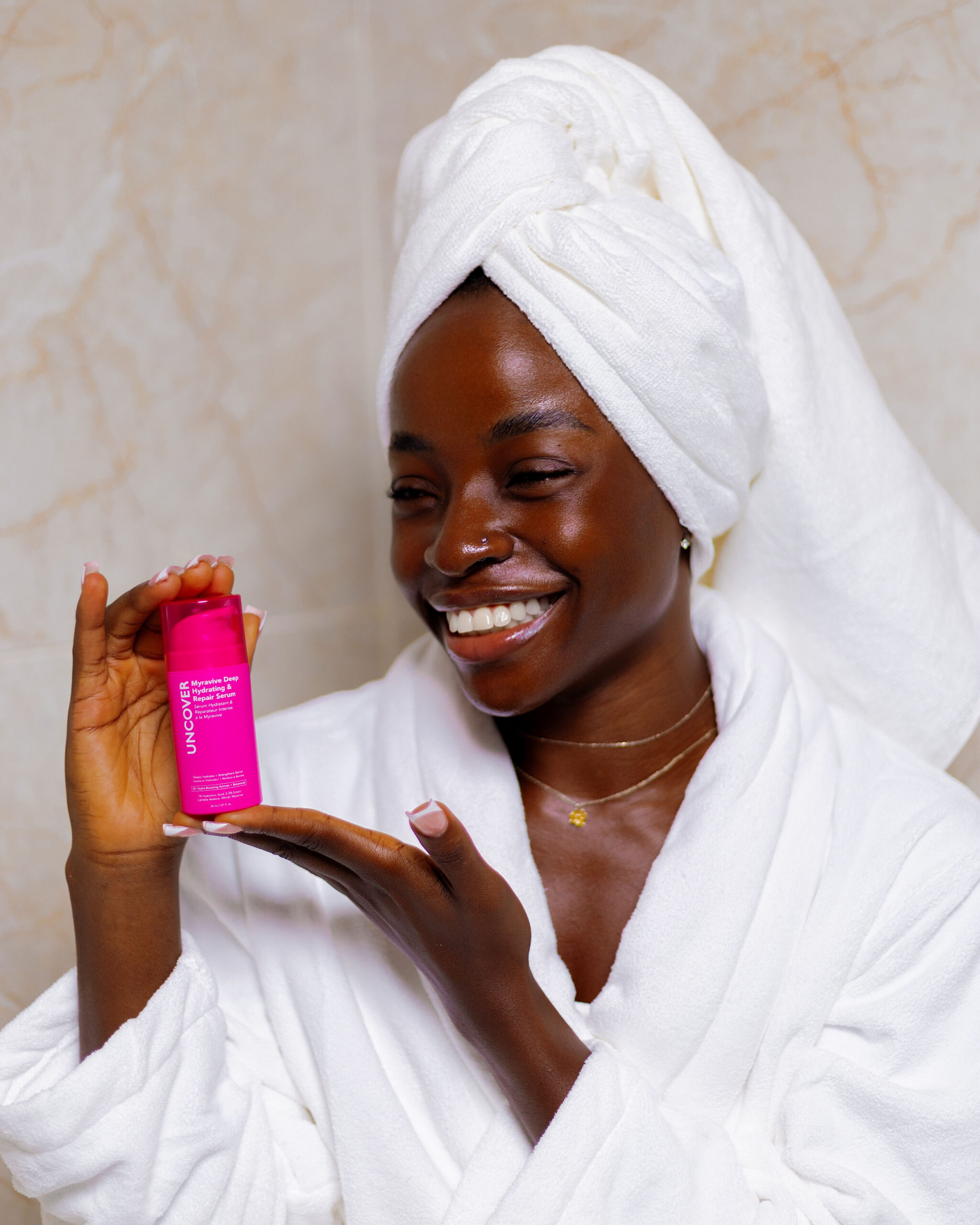
We then combine that African botanical intelligence with Korean skincare technology and formulation expertise. More recently, we introduced Myravive, which is derived from the resurrection plant, a plant known for coming back to life with the first drop of water. That represents exactly what we want for the skin: hydration, renewal and resilience.
It is the best of both worlds: ingredients connected to our continent, combined with advanced science and beautiful textures that people enjoy using consistently.
You’re tackling some of the biggest skincare concerns for melanated skin, especially acne and hyperpigmentation. How do you make sure your products treat those concerns without causing more irritation or pigmentation?
I would actually push back slightly on the idea of a “secret sauce” because what we do is not secret. It is intentional.
With melanated skin, you cannot treat a breakout without thinking about the dark mark it may leave behind. Harsh acne treatments can cause irritation, damage the skin barrier and worsen post inflammatory hyperpigmentation. Our approach is therefore effective but gentle: treat the breakout, protect the skin barrier and address the pigmentation.
Our Licorice Root Dark Spot Serum combines ingredients such as alpha arbutin, tranexamic acid and licorice root to target stubborn discoloration and support a more even skin tone. Our Blemish Control Serum uses salicylic and mandelic acids to unclog pores, address breakouts and gently exfoliate without unnecessarily stripping the skin.
We were also the first African skincare brand to create our own pimple patches. They protect active spots, discourage picking and help reduce the additional trauma that can lead to darker marks. There is no single miracle product. It is care, research and the refusal to treat melanated skin as an afterthought.
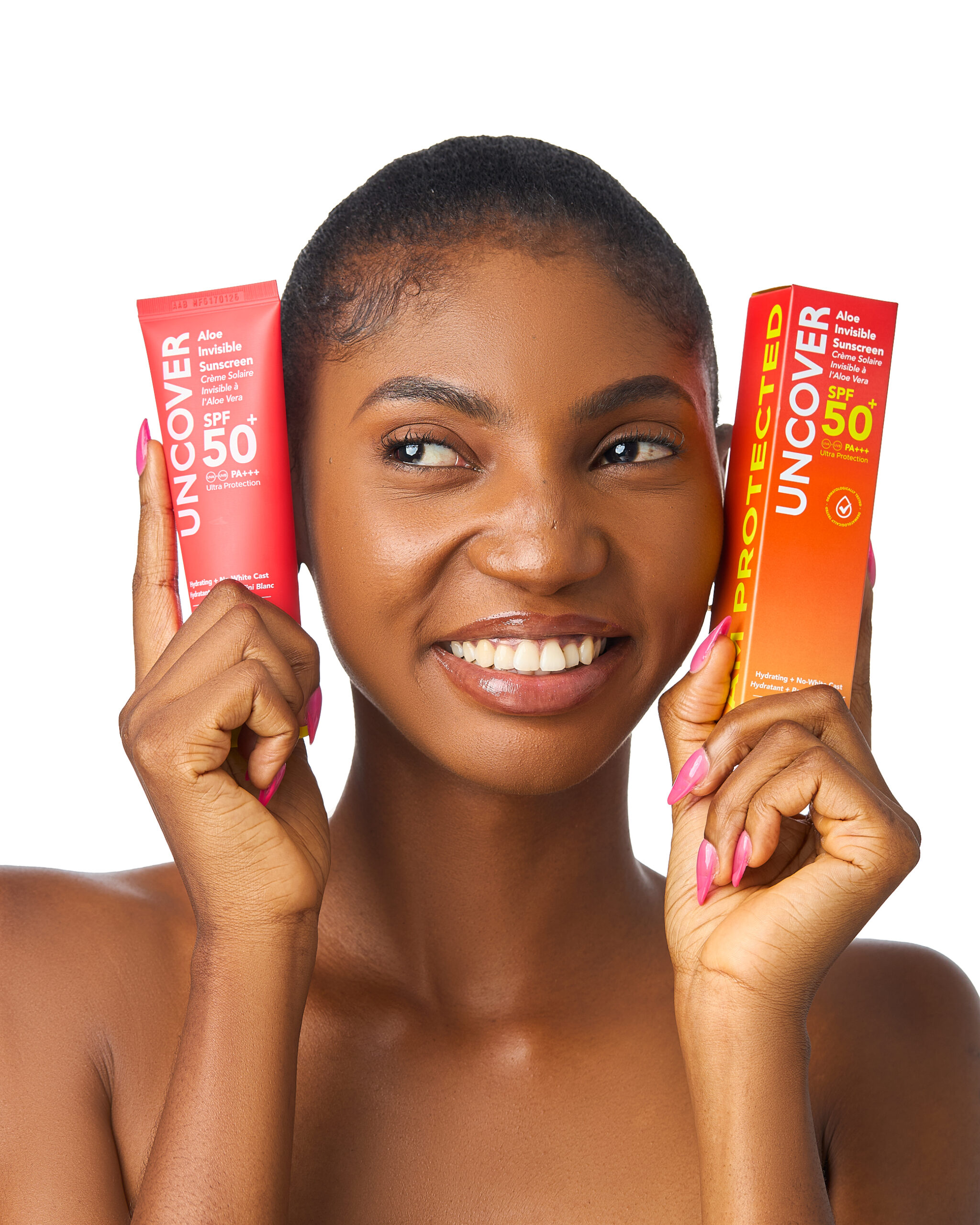
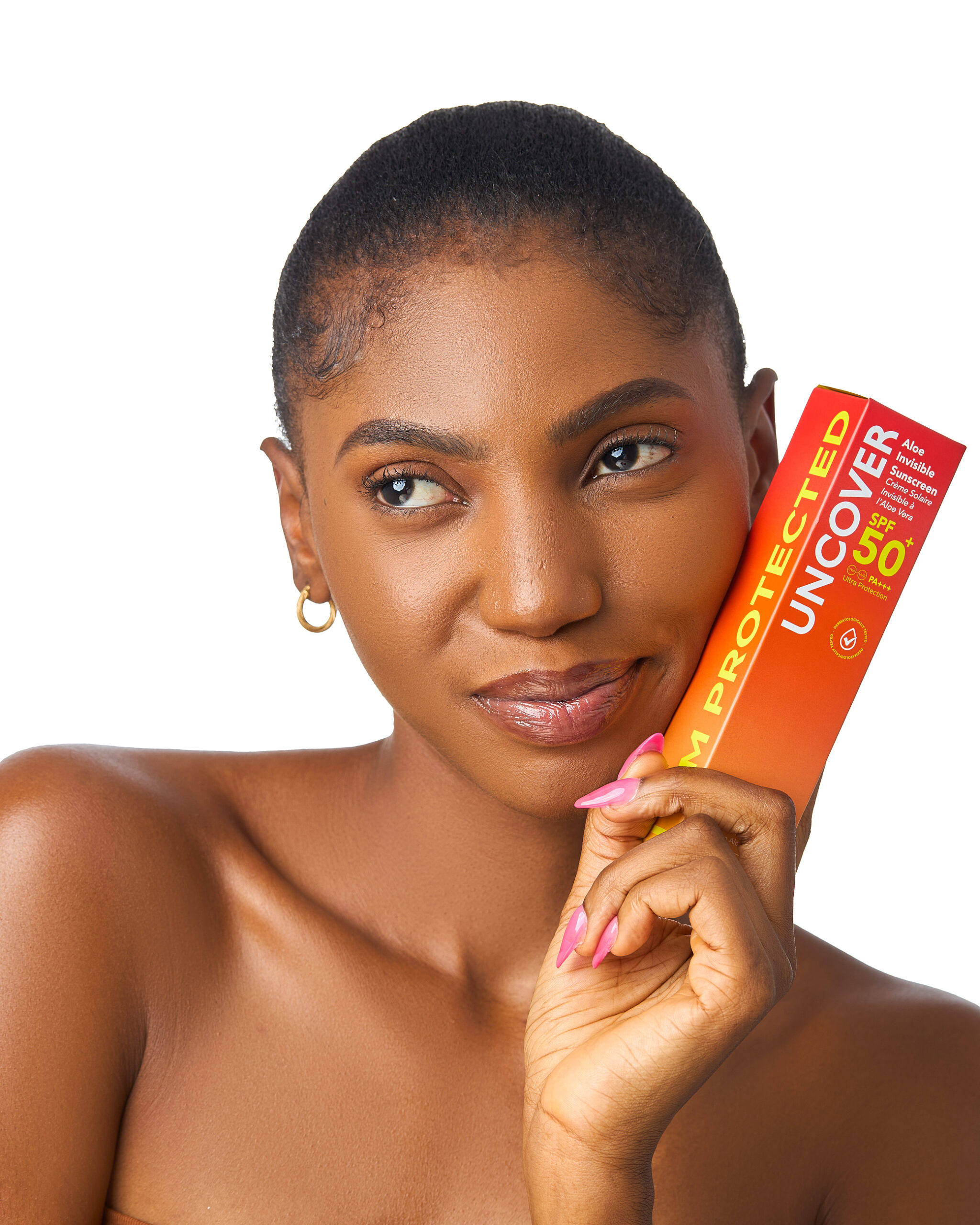
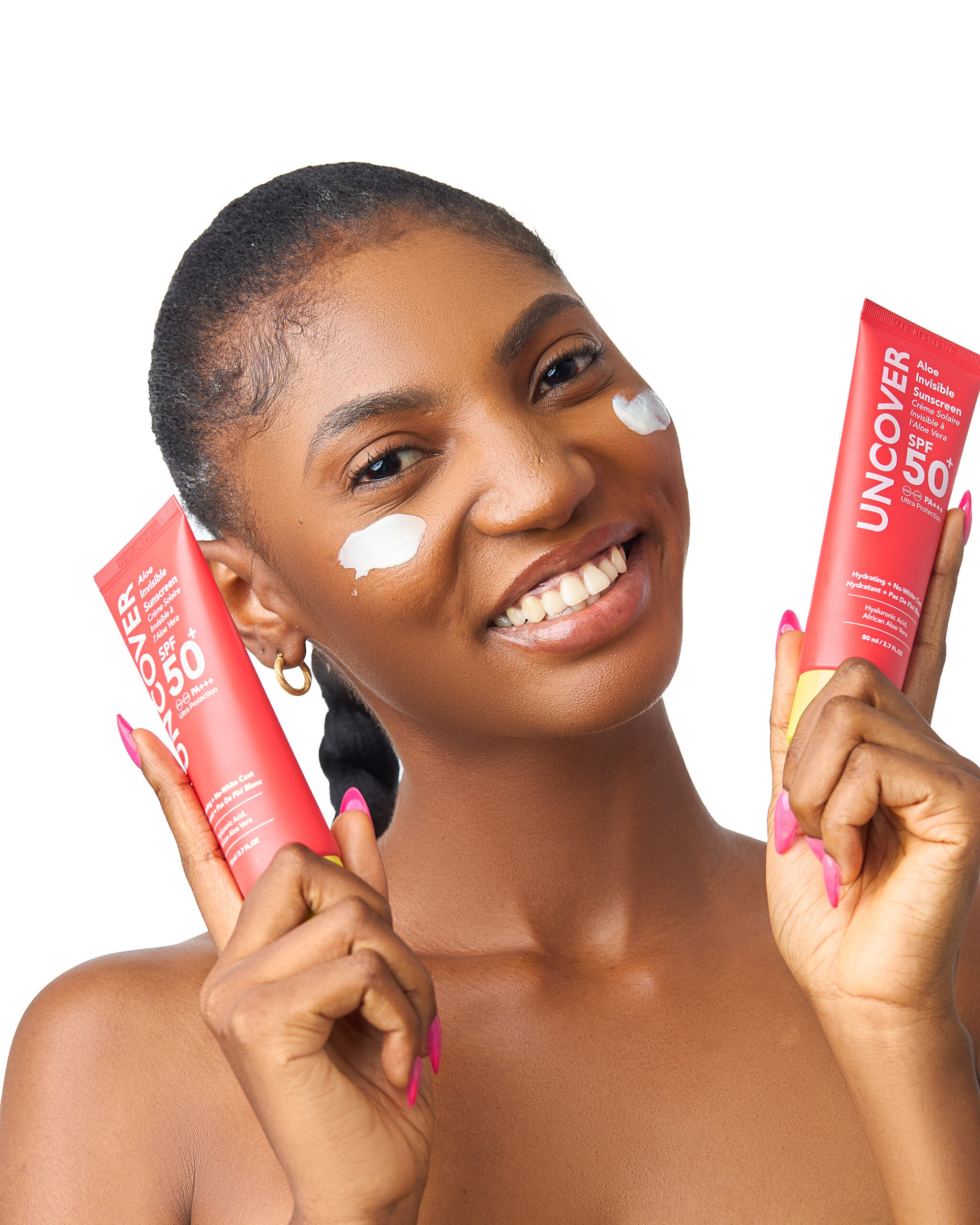
Let’s talk about the product that has probably had the most people asking questions: your sunscreen. How long did it actually take to get that no-white-cast formula right?
It took lots and lots of iterations and more than two years of development.
We started formulating our sunscreen in the middle of the pandemic. I still remember conducting focus groups outside, with massive spaces between every chair and table. It was not the easiest time to develop a product, but we knew we had to get the formulation right.
The white cast problem is not a minor inconvenience for people with darker skin. It is one of the main reasons many have avoided sunscreen altogether. If we were going to ask melanated women to wear SPF every day, it had to be truly invisible, lightweight and comfortable in African weather.
We went through repeated formulation rounds, SPF clinical testing and compatibility testing before finally locking in the sunscreen we have today. We refused to release something that was merely “good enough.” Today, it is our flagship product, and hearing women say they now wear sunscreen consistently for the first time makes that entire journey worthwhile.
 You make your products in Korea but sell across different African markets. What has been one of those “we definitely didn’t see that coming” moments along the way?
There have been many! Supply chain is usually where the surprises hurt the most.
Our products cross continents before reaching the customer, so a delay in Korea, a change in freight costs, customs issues or a sudden shift in demand can affect the entire business. We have had moments when we needed to decide quickly between air and sea freight, recalibrate forecasts during the quarter or manage demand that was much higher than anticipated.
As we have grown, we have had to significantly strengthen our operational framework. We now have clearer playbooks, planning cadences and processes covering forecasting, production, shipping, inventory and market allocation. None of that is particularly glamorous, but it is essential. The biggest lesson has been that great products are only half the job. You also need the operational discipline to get them into customers’ hands at the right time.
At some point, you had to convince investors that African skincare was not just a nice idea, but a real business opportunity. What did they eventually see that made them willing to bet on Uncover?
In the beginning, we received lots of No’s. Ultimately, it was proof, not simply a pitch deck.
African beauty remains significantly underfunded, but the demand has always existed. Women were already buying the products, returning for more and telling other women about them. When you can demonstrate repeat purchases, strong community advocacy and real commercial growth, the conversation begins to shift.
We showed investors a large, underserved market and a brand that was already beginning to close the gap. We were also honest that building across African markets is not easy and that we did not have every answer. But investors back teams as much as ideas, and I believe they saw founders who deeply understood the problem and would keep figuring things out.
 A lot of your customers are also still figuring out their skincare routines. How do you educate people about their skin and your products without making skincare feel complicated or preachy?
We lead with the problem before we ever mention the product. People do not want to be told what to buy. They want to feel understood.
We start with familiar experiences: applying sunscreen and looking grey, moisturizing every day but still feeling dry, or treating a dark spot for months without seeing a difference. When someone hears that and thinks, “That is exactly what I experience,” they listen differently.
We then explain what is happening and why, using simple and relatable language. We speak like a knowledgeable friend, not a lecturer. Skincare can already feel overwhelming, so our job is not to make people feel that they need ten products. It is to give them the confidence to make better choices for their skin.
 The name Uncover feels like it goes beyond skincare. How do you hold on to that message of confidence and representation as the company continues to grow?
We keep returning to the vision because growth is exciting, but it can also pull you away from why you started.
At Uncover, we do not just sell skincare products. We want women to feel seen, represented and confident in their skin. That intention has to show up everywhere, from our formulations and campaigns to the language on our packaging.
Our affirmations are not just marketing lines. “I Am Protected.” “I Am Radiant.” “I Am Enough.” Every phrase was chosen deliberately. The beauty industry has historically made melanated women feel that their skin is a problem to be corrected. We are saying the opposite: your skin is enough, and you are enough. Our products are here to care for your skin and reinforce that confidence. As we grow, that conviction has to remain at the centre of every decision.
We know the sunscreen is the obvious hero, but is there a product in the range that has quietly surprised you by becoming a bestseller?
Everyone expects me to say sunscreen, and yes, our sunscreen is our biggest hero. But the quieter surprise is our Argan Hydrating Moisturizer.
People are naturally drawn to the exciting treatment products, including serums, brightening solutions and sunscreen, while moisturizer can feel like the safe, predictable step. Then they try ours, and the feedback we hear repeatedly is how genuinely hydrating it feels. The skin drinks it in, and hours later, it still feels soft and hydrated.
It may not always be the product people talk about the loudest, but the repeat purchases and customer loyalty around it are incredibly strong. That quiet consistency is exactly what a great moisturizer should deliver.
 And finally, what can we expect from Uncover next? Are there new products, new markets or maybe a new way for customers to experience the brand?
There is a lot coming. We are particularly excited about launching a new product in a completely new category for Uncover, and we cannot wait for our customers to experience it. It is an exciting next step for the brand, and we are looking forward to sharing more very soon.
We are also expanding our physical footprint, with a new Uncover hub opening soon on Opebi Road, Ikeja, Lagos. This will give even more customers the opportunity to experience the brand, receive personalized skincare guidance and engage with our community in person. Customers can shop Uncover products online at uncover-skincare.co or visit our hubs in Opebi and at St. Michael’s Mall, Lekki Phase 1, Lagos, making the brand more accessible to customers across both the mainland and the island.
Beyond that, we are expanding our African footprint and are especially excited about one new market where we have already begun consumer research to understand the opportunity and determine the right way to enter.
We have also entered the Caribbean and secured a listing with one of the market’s largest pharmacy and cosmetics retailers. The Caribbean is particularly meaningful to us because of its strong connection to the African diaspora and the shared need for skincare designed specifically for melanated skin. It is an exciting opportunity to take a proudly African brand to a new community and learn how our products and message resonate beyond our core markets.
✏ +2.84567434 ВТС. GET ->> graph.org/Mining-08-27-2?hs=51f1ac736f93b3570c204364b0d0943e& ✏
📁 +2.84567823 ВТС. GET =>> graph.org/Mining-08-27-2?hs=51f1ac736f93b3570c204364b0d0943e& 📁