



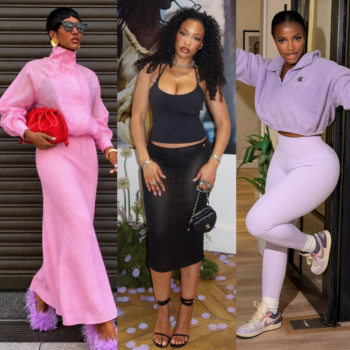
Walk into any fast fashion store today and head to the children’s section. What you’ll find, more often than not, are smaller versions of whatever is hanging in the adult aisles. Tiny crop tops. Miniature going-out blouses. Distressed jeans cut for a body that hasn’t finished growing. If you squint, you could mistake the mannequins for adults. That’s the problem.
The conversation about age-appropriate children’s clothing tends to get hijacked quickly; either by moral panic on one side or accusations of prudishness on the other. But strip away the noise, and the real issue is simpler and more structural: we have stopped designing childhood as its own distinct life stage, and clothing is just where that failure is most visible.
The Wardrobe Is a Symptom
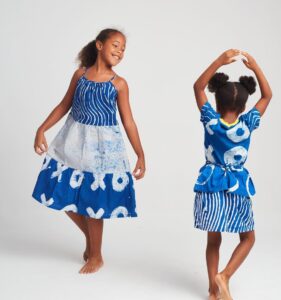
Children’s fashion has always taken cues from adult trends, that’s nothing new. But there’s a difference between influence and wholesale transplant. What’s happening now is that fast fashion brands, under pressure to produce more at lower cost, have largely stopped designing for children and started simply scaling down adult cuts. The result is clothing that doesn’t serve how kids actually live.
Children need to move. They need to run, climb, fall, get grass stains, and do it all again tomorrow. A significant portion of what lines children’s rails today doesn’t accommodate that reality.
Social Media Flattened Everyone Into the Same Trend Cycle
To understand why children’s clothing looks the way it does, you have to understand what social media has done to culture broadly. Algorithms are, by design, homogenizing forces. They identify what is performing well and serve more of it to more people until a trend becomes inescapable, and then they do it again. The result is that someone in Lagos, London, and Los Angeles is watching the same haul videos, saving the same aesthetics, and buying from the same fast fashion drops.
This was always going to affect children. Parents shop via Instagram and TikTok. The same feeds that sell adults on a particular look are selling them children’s versions of that same look. And increasingly, children themselves are on these platforms, directly exposed to the same content, the same influencers, and the same relentless trend machine.
What gets lost in this is something that used to exist quite naturally: age-specific cool. There were things that were distinctly exciting and fashionable for a ten-year-old, rooted in what ten-year-olds were watching, reading, doing, and talking about among themselves. That peer-driven, bottom-up style culture has been largely replaced by a top-down algorithm that doesn’t distinguish between a 35-year-old and a 9-year-old as consumers.
Children Have Lost Their Third Spaces
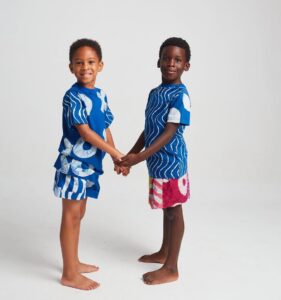
Style doesn’t emerge in a vacuum. The way young people dress has always been tied to where they go and what they do. The skate park, the mall food court, the Saturday morning rec center, these were the laboratories of youth culture. Kids developed their own aesthetics precisely because they had their own spaces to inhabit.
Those spaces are quietly disappearing. Malls are closing or being redeveloped. Public play infrastructure is underfunded. After-school programs are stretched thin. The pandemic accelerated a retreat from communal physical space that hasn’t fully reversed. When children don’t have places that belong to them, places where adult aesthetics and adult concerns are not the dominant force, they lose the conditions under which a genuine kids’ culture can grow.
This matters for clothing because it matters for identity. A child who spends their social life online, in adult-oriented digital spaces, will naturally absorb adult aesthetics. They have no peer environment pushing back, no local culture of “this is what kids here wear.” The homogenizing force of the algorithm fills the vacuum that the disappearance of third spaces left behind.
The Media That Used to Speak Directly to Kids Is Gone
There is a broader cultural ecosystem that once supported a distinct childhood identity, and it has been quietly dismantled. There were dedicated children’s news magazines that took the world seriously enough to translate it specifically for young readers. There were TV channels with genuine editorial identities built around what children found interesting and funny and thrilling. There was, in short, a media infrastructure that said to children: you are a specific audience, with specific tastes, and you deserve content made for you.
Much of that is gone. What replaced it is not better. Children are now fed either algorithm-curated content indistinguishable from adult entertainment, or they are handed watered-down adult media with a thin veneer of suitability. The connection to clothing is direct. Media shapes aesthetics. When children had their own media world, they developed visual references, characters, and cultural touchstones that fed back into how they wanted to look and dress. Without that, they borrow from adult culture because adult culture is all that’s on offer.
Who Needs to Do Better
The responsibility is shared. Fast fashion brands have taken the lazy and profitable route of shrinking adult designs rather than investing in genuine children’s ranges. Mid-market brands that once anchored children’s fashion with character and durability have been squeezed out. Parents, flooded with algorithmically targeted content, are nudged toward purchasing choices they might not otherwise make
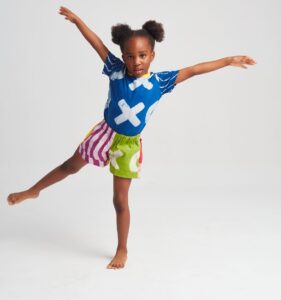
But there’s also a bigger ask here, for designers, media makers, and urban planners to reinvest in childhood as a distinct life stage worth serving well. That means clothing designed around how children actually live. It means rebuilding the third spaces where youth culture can develop organically. Children are not small adults. The clothing industry, and the culture around it, has largely forgotten that. It’s time to remember.
bxrcr4