
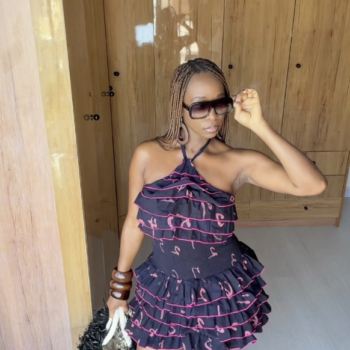
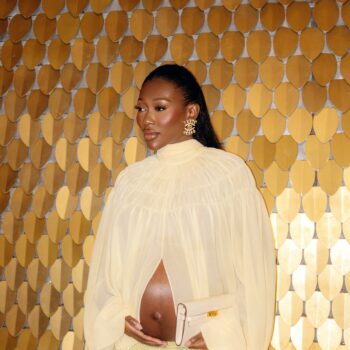
On a continent where stories are currency and culture is power, Grace Kahaki is shaping narratives that travel far beyond the screen. This International Women’s Month, we spotlight a visionary who is not only redefining what it means to be a woman in the African film industry, but Grace is also quietly building a legacy behind some of the industry’s most compelling productions.
Born of Kenyan and Malawian heritage, Grace is notably one of Kenya’s few leading women in film directing and producing, and the co-owner of Insignia Productions. She is the director and producer of Single Kiasi and Chocolate Empire on Showmax, and the director of the Netflix limited series Kash Money. Her work has earned her recognition across the industry, including winning Best TV Director at the Women in Film Awards, alongside numerous Kalasha Awards and Zanzibar International Film Festival (ZIFF) nominations.
Her love for storytelling began early, as a child acting and performing in high school back in Malawi. Though her mother envisioned a different path for her as a doctor, Grace went on to study psychology at the United States International University (USIU). She interned at a Psychology clinic and moved on to another firm set at “Mnet Film Studios” that everything shifted, she discovered a deep love for storytelling and the creative process of bringing scripts to life on film sets. That moment marked the true beginning of her journey in the film industry where she used her Psychology in analyzing characters as she worked on scripts. Grace’s career spans over 15 years where she has built her name and she continues to constantly evolve with the times.
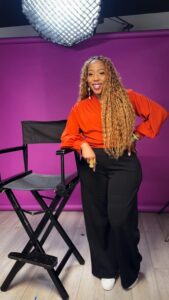
Women’s Month is about celebrating trailblazers. As one of the few Kenyan women directing and producing for Netflix while co-founding a pan-African production house, how does it feel to be one of the women being celebrated this month?
I am so honored. When you have been working so hard for a long time and people start to recognize your work, it feels validating. For example, I have just left a film set to join this meeting and it shows the amount of work and dedication that is needed to thrive in this industry. It has taken many twists and turns over the last 15 years to get here. Being in the creative business can be challenging since it’s not a linear career path. Most of the times you must go out and look for business, you are not certain if you will get the client, but you must live by faith and believe that everything is going to work out.
The client that we are currently in production with contacted me 4 years ago and now is when the actual work is being done. So, you must be very persistent in following up on work and opportunities. I have been persistent and managed to build my name and reputation.
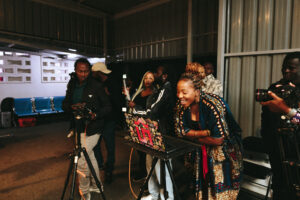
As a woman, you just have to keep going, believe in yourself and have a good support system. The film industry is a great industry but it’s not an easy industry. It demands a lot of your personal time; thus, you need a support system that understands your work and keeps you grounded amidst everything. Sometimes things get tough and life will try to break your spirit but having a support system helps you keep sane.
Across corporate films, commercials, documentaries, and major streaming platforms, your work spans an impressive range of storytelling formats. How has your perspective as a woman influenced the stories, you are drawn to tell and in particular, how does it shape your commitment to amplifying the voices and experiences of African women?
I gravitate towards women’s stories because they are about me and millions of other women across the world. I also want to showcase the diverse personalities and characters of women that we experience in our everyday lives. I want to show people that African women are not monoliths. We need to allow African women to be multiple things. To be heroes and villains, lovers and cheaters to be sinners and to be flawed. The narrative cannot remain limited to the familiar archetypes of the doting wife or the wise grandmother. It’s about creating space for more layered, honest, and unapologetically diverse representations that reflect the true breadth of African women’s experiences.

You have directed and produced across very different formats from corporate projects, commercials, documentaries, and Netflix projects. Which of these formats challenges you the most creatively, and why?
I find action movies to be quite a challenge to film since you need to capture numerous takes for a single scene. There are also the special effects that goes into each character that have to be taken into consideration.
How has the rise of Netflix Originals from Africa reshaped global perceptions of storytelling from the continent? From your unique vantage point as both a creator and someone working closely with the platform, what kinds of stories do you feel global audiences are increasingly drawn to from African filmmakers?
Authenticity. There was a movie whose storyline was based in Malawi but none of the actors were from Malawi. This made it unrelatable. We need to work with people who provide the true context of the story we are telling. Whatever stories we tell, we need to believe in them first so that we can touch people through them. We are open to a variety of stories so long as its authentic, honest and believable. Something we learn in film school is the concept of belief. If an actor plays a role and is not convincing, then it means that they did not fully commit to portray that role, and it feels forced. We need stories that we can invest all our emotions in and that are authentic to us.
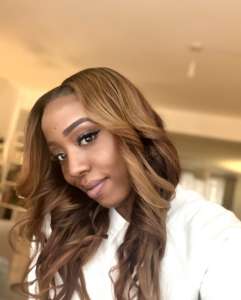
Looking ahead over the next 5–10 years, what vision are you building for your production house and your evolution as a director? Are there dream projects on the horizon perhaps in Virtual Reality, interactive storytelling, or untapped African narratives you are particularly excited to bring to life?
Looking ahead, I hope we can build stronger policies and institutions that protect actors and the value they bring in an increasingly AI-driven industry. Performers invest deeply in their personalities, their emotions and that contribution deserves to be safeguarded.
At the same time, I’m interested in exploring how AI can be meaningfully integrated into our workflows to improve efficiency. If it helps reduce production timelines without compromising creativity, then it becomes a powerful tool, one that allows us to create more, and create better.
On a personal and professional level, I am focused on expanding globally joining some of the world’s notable directors’ guilds, working on international projects, and continuing to build recognition as a filmmaker on a global stage.
Who are the Kenyan and African women mentors, peers, or crew members who have lifted you up along the way?
My mum was one of my biggest supporters in my journey before she passed on. Mum was very proud of the things I had achieved in my film career. My mum and dad passed on during the Covid times. They passed 6 months apart. They were so close to each other, when my mum passed on, my father’s life fell apart also. I have 2 sisters, one in Malawi and the other in Zambia.
My friend Carolyne Kendi who is an astute and experienced brand building & commercial marketing professional with over 20 year’s experience in the corporate world has been a big supporter of mine. I consistently check in with her and get a few nuggets of wisdom on how to run a business as a woman. I also have a tight knit circle of women and we support each other as friends and in our careers.
Wanuri Kahiu has played such a vital role for Kenyan films and opened my eyes to new possibilities in this field. I really admire her work and her grit to develop her vision to reality
How did your journey with Philippe Bresson begin, and what sparked your collaboration?
When I met Phil who is a Director and Cinematographer, he was contemplating on shutting down Insignia Productions which he had founded in 2007. But when I came in as a partner in 2012 we got along well and we decided to restructure the business together. He brings a lot of industry networks and expertise as a cinematographer. I brought my skills as a director and producer forming a synergy that we can work with very well. We are able to bounce off each other and to stand in for each other. We also keep each other focused and treat each other with respect as we align to the main company goals.
Co-founding a production house that works with clients all over Africa is no small feat. What were the biggest early hurdles in building a pan-African client base, and how did you overcome them?
After I joined the Insignia team. We began working with local TV stations who had limited budgets at the time. We had to make it work and deliver weekly shows. Unfortunately, the local film industry hasn’t grown to a point that you can rely solely on TV productions. Covid also prompted us to pivot into other income streams. We realized that we were not only good at storytelling, but we also had great production qualities. We then delved into commercials, documentaries and working with international clients.
For example, we are currently facing the closure of Showmax which has been a dominant streaming platform for the local film scene. Showmax has really elevated the Kenyan film industry. They have had great budgets for all categories across the board and supported actors in gaining more value for their skills and negotiating for better pay. If we had not pivoted back then and been only relying on Single Kiasi, we would be in a very tricky place right now.
Is there any film you directed where you felt your perspective as a woman fundamentally changed the final story?
Single Kiasi is one of the most successful films I have worked on that is on Showmax I like it because the three main characters are women in their 30’s who are navigating their careers and dating lives from very different perspectives. I was able to guide the script from a woman’s perspective to make it more relatable and real. One of the characters has made the decision that she will only pursue rich men because she wants an elevated lifestyle.
The other character is in the corporate world, but she is lacking in her love life. The last character is a single unmarried mother of 2 children who wants to prove to herself that she is deserving of love. Single Kiasi allowed us to show women in different personalities that we experience in our everyday lives. I also wanted to get rid of the shame that women experience as they go after their own dreams and desires. One of the reasons why people love the show is that they can see themselves in these characters.
You have broken glass ceilings most people thought were concrete. What’s one systemic change you’d like to see in Kenya’s)film industry by the end of this decade to make it truly equitable for everyone?
One thing that I liked about Showmax is the variety of shows they had on the platform. I would like to see a variety of stories about Kenya and its people being told. We have had a certain stereotype dominate our stories, but it’s time that changed to accommodate our own diversity. We need more African stories around Science Fiction, horror, fantasy etc. I loved the storyline for Katikati that was submitted for the 2016 Toronto International Film Festival and it won the Prize of the International Federation of Film Critics (FIPRESCI) for the Discovery program. It was a dystopian movie that had a very good storyline. Why can’t we do a horror movie about a woman who is a serial killer at a local university? There will be psychological aspect of us trying to understand what caused her trauma. Is she schizophrenic or is she just pretending? I’d love to do something like the 6th sense that was a psychological thriller with an unexpected plot twist.
If you could go back in time to your younger self, what single piece of wisdom would you share?
Stop trying to control everything. I learnt this as I was switching my career and getting into film. Change is not always a bad thing, and it led me into a space where I am thriving. The fact that I ended up in a place I hadn’t ever envisioned and I am really happy here.
As we celebrate Women’s Month across Africa, what legacy do you hope to leave not just through the films you have made, but through the next generation of female directors and producers your production house is raising?
When I joined the film industry, there weren’t direct mentors whom I could learn from. In my company, I have a policy that 60% of the crew in all departments must be women. I want more women to see film as a career that deserves respect and provides an honorable livelihood. I want to show people that it’s a place you can flourish and meet amazing people globally.
Great article, i really enjoy reading it, i hope you post more, keep up the good wok , is gona come follow you for more , nice reading it.