
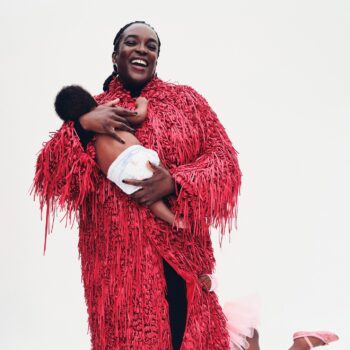


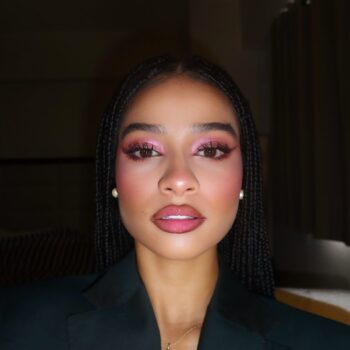
If you’re a young Nigerian who grew up loving fashion and appreciating how it marks pivotal moments in life: weddings, birthdays, work attire, and celebrations. You most likely always understood that style reflects the rhythm of life and, ultimately, one’s identity. It answers the question, “Who are you?” in a way that speaks to history, culture, and personal aspirations.
So let’s break it down and explore it through some of us Gen Z ’s coming-of-age journey, and the influences passed down through generations, paying homage to what has shaped our sartorial narrative.
The Coming-Of-Age Process
Some of us grew up watching a lot of TV, mostly international content like Disney Channel and Nickelodeon, alongside homegrown series on YouTube and DSTV. We were always drawn to female characters, either because we resonated with their stories and found their audacity inspiring, or because of their undeniable sense of style. Their fashion always seemed to say, “I’m here, I’m showing up as my full self, still a work in progress, but fabulous.” That level of authenticity stayed with us and sparked our love for bold colours and expressive prints. So yes, we can all thank That’s So Raven for that. And later, the fashion moments on shows like Gidi Up and Skinny Girl in Transit on Ndani TV had us eagerly anticipating what our personal styles would look like in our early-mid twenties.
Beyond the screen, for some of us, our mother’s wardrobe, which we probably still shamelessly borrow from, influenced our tastes in ways we can’t deny. Watching them gave us a front-row seat to the versatility of a woman’s closet and how it evolves over time.
Looking at them now, we realise they were once just girls too—fierce, stylish, and finding their way. And in many ways, we see that same journey reflected in ourselves.
Cultural References
We cannot deny the influence of the women who came before us. From the Iro and Buba or Oleku and Adire in Yoruba culture, to the George wrappers paired with stylish blouses worn by Igbo matriarchs, and the Fulani Mudukare, these looks bridged tradition and personal expression. Even today, the girlies are wearing them with pride, proving that style passed down through generations remains timeless.
View this post on Instagram
View this post on Instagram
View this post on Instagram
View this post on Instagram
View this post on Instagram
View this post on Instagram
While we’ve added our own modern twists, the foundation of cultural identity remains intact.
At the same time, globalisation and digital culture have introduced new expressions of style that continue to shape our sense of self. The rise of social media and pop culture, both within and beyond the continent has given birth to aesthetics and movements like the clean-girl look, Alté fashion, bohemian influences, emo subcultures, and more.
View this post on Instagram
That’s the beauty of fashion: it transcends time and space, yet still carries the same message of self-expression, just delivered through different lenses. It shows our ability to honour where we come from while embracing where we’re headed.
As we look to the decades ahead, we can’t help but wonder what the next intersection of fashion and identity will look like. Will it be something borrowed, something invented, or something entirely new?
i enjoy reading your articles, it is simply amazing, you are doing great work, do you post often? i will be checking you out again for your next post. you can check out webdesignagenturnürnberg.de the best webdesign agency in nuremberg Germany
i enjoy reading your articles, it is simply amazing, you are doing great work, do you post often? i will be checking you out again for your next post. you can check out webdesignagenturnürnberg.de the best webdesign agency in nuremberg Germany
i enjoy reading your articles, it is simply amazing, you are doing great work, do you post often? i will be checking you out again for your next post. you can check out webdesignagenturnürnberg.de the best webdesign agency in nuremberg Germany
i enjoy reading your articles, it is simply amazing, you are doing great work, do you post often? i will be checking you out again for your next post. you can check out webdesignagenturnürnberg.de the best webdesign agency in nuremberg Germany
i enjoy reading your articles, it is simply amazing, you are doing great work, do you post often? i will be checking you out again for your next post. you can check out webdesignagenturnürnberg.de the best webdesign agency in nuremberg Germany